Quick buyer overview
This long-form guide is now organized for faster scanning. Jump to the section you need, search other Shopye articles, or continue reading the full wholesale breakdown.
- Compare MOQ, pricing, and supplier reliability before ordering.
- Use the section index to jump straight to price, supplier, or FAQ details.
- Search more wholesale guides without leaving the article page.
If you want to know how to sell on Amazon for beginners, this guide will walk you through every step of starting your journey in 2026. The Amazon marketplace has changed significantly compared to previous years, and understanding the new landscape is crucial if you want to succeed. Today, selling on Amazon is no longer just about listing products and hoping they sell. With the full integration of Rufus, Amazon’s AI shopping assistant, and the A10 algorithm focusing on intent-based results rather than simple keyword matching, you need a smarter approach from day one.
The A10 algorithm now prioritizes listings that match what customers truly want, so your success depends on understanding their needs and optimizing your listings accordingly. This is where semantic SEO becomes essential. Instead of stuffing your title or description with random keywords, you need to create content that is readable, engaging, and aligned with how buyers search for products. Your product descriptions, titles, and bullet points should reflect real customer intent, improving visibility and conversion.
At the same time, logistics play a larger role than ever in 2026. Amazon no longer handles all manual prep for new sellers, which means using third-party logistics providers effectively can make or break your business. From labeling with FNSKU codes to managing inbound placement fees and shipping schedules, every step in fulfillment needs attention.
By the end of this guide, you will have a clear roadmap for setting up your account, sourcing products, optimizing listings, and managing logistics efficiently. You will also learn how to leverage AI tools and semantic strategies to gain an advantage over competitors. Following these steps will give you the foundation to build a strong Amazon business, even as a beginner navigating the 2026 selling landscape.
Step 1 – Setting Up Your Amazon Seller Account

When starting your Amazon journey, one of the first decisions you need to make is whether to choose the Individual or Professional seller plan. The Individual Plan charges $0.99 per sale and is ideal if you are testing the market with fewer than 40 units. It allows you to start selling without a monthly subscription, making it a low-risk option for beginners. On the other hand, the Professional Plan costs $39.99 per month but unlocks powerful features like advertising, bulk listing tools, and eligibility for Brand Registry 3.0. If your goal is to grow your business and scale quickly, the Professional Plan is the better choice because it gives you access to all the tools needed for long-term success.
To get your account verified, you must have the right documents ready. This includes your EIN or Tax ID, a Resale Certificate, and any documentation required for Brand Registry 3.0. Amazon has streamlined the verification process in 2026, but it has become less forgiving of errors. Ensuring your documents are complete and accurate will prevent delays and allow you to start selling faster. You can auto-find tips for account setup by using guides and Amazon Seller University tutorials, which show exactly what information Amazon requires.
Once your account is active, you enter what is often called the “Honeymoon Period.” During the first 30 to 60 days, Amazon gives new listings an initial boost in visibility. This is the best time to make your first sales, but only if your inventory is already in the warehouse. Listing a product too early can waste this important boost and slow your early performance metrics.
To avoid errors during setup, double-check all your personal and business information, verify your payment methods, and ensure your bank account matches your Amazon account details. Make sure you follow the correct process for Brand Registry verification if you plan to sell under your own brand. Taking these steps will help you avoid common pitfalls and position your account for long-term success.
By carefully choosing the right plan, preparing the necessary documents, understanding the Honeymoon Period, and following setup best practices, you lay a strong foundation for your Amazon business in 2026. This approach ensures you start efficiently and avoid mistakes that could slow your growth.
Step 2 – Sourcing Your First Products
One of the most important steps in learning how to sell on Amazon for beginners is finding the right products to sell and then partnering with the best Amazon FBA wholesalers. In 2026, Amazon provides advanced tools like Product Opportunity Explorer, which helps you discover niches with high demand but low competition. By using this tool, you can see which products customers are actively searching for and identify areas where their needs are not fully met. This allows you to focus on opportunities that are more likely to generate sales without being lost in a crowded market.
To understand your competition, use a Reverse ASIN Lookup. This method lets you analyze your competitor’s listings to see what keywords they are ranking for, their pricing, and customer reviews. By studying their strengths and weaknesses, you can identify gaps in the market. Look for products with low Click-to-Sales ratios because these indicate that customers are searching for items but not finding exactly what they want. Targeting these unmet needs can give your product an advantage and increase your chances of success.
When deciding how to sell, you will need to choose between Private Label and Wholesale. Private Label allows you to create your own brand, giving you more control over pricing, packaging, and marketing. Wholesale means buying existing products in bulk from manufacturers and selling them on Amazon, which can be faster to start but often comes with thinner profit margins. Both strategies can work, but your choice should align with your long-term goals and available resources.
In 2026, AI tools will make it easier than ever to auto-find profitable products. You can use AI to analyze search trends, customer reviews, and competitor data to generate a list of high-potential products. These tools save time and give you insights that were previously difficult to access manually, helping you make informed decisions faster.
As you research, remember to take actionable steps to protect and optimize your listings. Validate your products by checking trademarks and ensuring compliance with Amazon policies. Ungate restricted categories if necessary, and optimize your listings using intent-based keywords and semantic SEO strategies. These steps will help your products stand out, perform better in search results, and increase your conversion rates.
By combining Product Opportunity Explorer, Reverse ASIN analysis, AI tools, and careful validation, you can effectively find profitable niches, target unmet needs, and position your Amazon business for success in 2026.
Step 3 – Fulfillment & Logistics in 2026
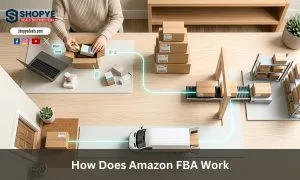
When you start selling on Amazon in 2026, managing your logistics efficiently is just as important as finding the right products. Since Amazon no longer provides in-house manual prep for new sellers, using a Third-Party Logistics (3PL) prep center has become essential. A 3PL partner receives your products from the manufacturer, inspects them for quality, applies FNSKU labels, and ships them into Amazon’s network. This ensures that your inventory meets Amazon’s standards and arrives at the warehouses on time, reducing the risk of delays or penalties. By outsourcing these steps, you save time and avoid errors that could impact your early sales and performance metrics.
To make the most of your 3PL partner, it is important to understand key logistics terms. FNSKU is a unique barcode that Amazon uses to track your products. Every item you send to Amazon must have a correct FNSKU label to ensure sales are credited to your account. LTL, or Less Than Truckload, is a shipping method that allows multiple sellers to share truck space, reducing costs for smaller shipments. The Inbound Placement Fee is a per-unit charge Amazon may apply if you do not split your shipments across multiple warehouses yourself. Knowing these terms helps you plan your shipments efficiently and avoid unexpected fees.
There are best practices you can follow to avoid extra costs and delays. First, plan your shipments carefully and make sure your inventory is ready before sending it to the 3PL center. Use the packing guidelines provided by Amazon to prevent rejected shipments. Consider splitting larger shipments across multiple warehouses to minimize Inbound Placement Fees. Communicate clearly with your 3PL provider to ensure timely inspections and labeling. By taking these precautions, you protect your cash flow and maintain a smooth supply chain.
Logistics also directly affect your inventory levels and sales metrics. If your shipments are delayed or your products arrive without proper labeling, your inventory performance index (IPI) can drop, limiting the amount of stock Amazon allows you to store. Delays in fulfillment can also reduce conversion rates because products are unavailable for fast shipping. Efficient logistics, therefore, not only save money but also improve your search ranking and overall sales performance.
By partnering with a reliable 3PL prep center, understanding FNSKU and shipping fees, following best practices, and monitoring your inventory metrics, you ensure your products reach customers quickly and accurately. This sets the foundation for a successful Amazon business and positions you to scale efficiently in 2026.
Step 4 – Optimizing Listings for 2026

In 2026, understanding how Amazon’s A10 algorithm works is crucial if you want your listings to succeed. One of the biggest changes for beginners is the shift from traditional keyword stuffing to semantic SEO. In the past, sellers tried to pack as many keywords as possible into their titles and descriptions, hoping the algorithm would rank them higher. Now, Amazon prioritizes readability and buyer intent. Keyword stuffing, like “Silicone Spatula Heat Resistant Non-Stick Red Best Kitchen Tool,” can actually lower your ranking because it looks unnatural to both the AI and human shoppers. Semantic SEO focuses on creating content that is clear, relevant, and matches what buyers are searching for in context.
Writing Titles and Descriptions for Humans and AI (Rufus)
To perform well in 2026, you need to balance writing for human readers and Amazon’s AI assistant, Rufus. Your titles should clearly describe the product while highlighting the main benefits in a natural way. For example, instead of a long list of random keywords, write “High-Heat Silicone Spatula for Non-Stick Cookware – Ergonomic Red Design.” Descriptions and bullet points should be informative, easy to read, and answer common customer questions. This approach not only helps your listings rank better through semantic SEO but also increases the likelihood of conversions because buyers immediately understand the product’s value.
Using Intent-Based Long-Tail Keywords for Higher Conversion
Long-tail keywords are phrases that are more specific and reflect exactly what buyers are searching for. In 2026, using intent-based long-tail keywords means you focus on words and phrases that indicate buying intent, like “best non-stick spatula for cooking pancakes” instead of just “spatula.” These keywords help you attract customers who are ready to purchase and improve your conversion rate. By analyzing what your competitors rank for and using AI tools to auto-find relevant long-tail phrases, you can target the most profitable search terms and increase your chances of sales.
Tracking Key Metrics: IPI, TACOS, Return Rate, CVR
Optimizing your listings is not just about writing; you also need to track key performance metrics. Your Inventory Performance Index (IPI) shows how well your stock is managed and affects how much inventory Amazon allows you to store. TACOS, or Total Advertising Cost of Sales, helps you measure your advertising spend against total sales to ensure you are profitable. Keep an eye on your Return Rate, as high returns can lead to processing fees and lower your search ranking. Finally, Conversion Rate (CVR) indicates how well your listings turn clicks into sales. By monitoring these metrics, you can make data-driven decisions, adjust your SEO strategy, and continuously optimize your listings to grow your Amazon business efficiently.
By focusing on semantic SEO, writing for both humans and AI, using intent-based long-tail keywords, and tracking performance metrics, you position your products to rank higher, convert better, and succeed as a beginner seller in 2026
Step 5 – Tracking Your Metrics & Scaling.
Once your products are live on Amazon, monitoring your performance is one of the most important steps to ensure your business grows successfully. Amazon Seller Central provides all the tools you need to track how your listings are performing, measure sales metrics, and identify areas that need improvement.
You can view detailed reports on sales, traffic, conversion rates, and advertising performance. By regularly checking these reports, you can make informed decisions about pricing, inventory, and marketing strategies. Using these insights allows you to optimize your listings, improve visibility, and stay ahead of competitors.
Replenish Inventory, Audit Listings, and Scale Successfully
Managing inventory is a key part of maintaining a successful Amazon business. You need to monitor stock levels and replenish inventory before you run out, especially for fast-selling products. Running out of stock can hurt your ranking and slow down your sales momentum. Regularly auditing your listings is also crucial. Check titles, bullet points, images, and keywords to ensure everything is optimized for both humans and Amazon’s AI.
Once you understand which products are performing well, you can focus on scaling your business. This may involve adding more SKUs, increasing advertising spend, or expanding to new niches. By systematically replenishing, auditing, and scaling, you maintain consistent sales growth and long-term profitability.
Importance of Maintaining CVR >10% and Low TACOS
Conversion Rate (CVR) and Total Advertising Cost of Sales (TACOS) are two critical metrics for your success in 2026. CVR measures the percentage of visitors who buy your product after viewing your listing. Maintaining a CVR above 10% signals to Amazon’s A10 algorithm that your listing is relevant and valuable, which improves your search ranking. TACOS tracks your total ad spend against your overall sales. Keeping TACOS low ensures that your advertising remains profitable and does not eat into your margins. By monitoring these metrics in Seller Central, you can adjust your marketing strategy, optimize your listings, and focus on the products that generate the highest return.
By regularly using Amazon Seller Central to track performance, replenishing inventory on time, auditing your listings, and maintaining strong CVR and TACOS metrics, you create a framework for consistent growth. This approach ensures that your Amazon business remains competitive, profitable, and scalable, giving you the tools you need to succeed as a beginner seller in 2026.
Common Mistakes Beginners Make
Starting your Amazon business in 2026 comes with a learning curve, and avoiding common mistakes early can save you time, money, and frustration. One of the most frequent errors beginners make is keyword stuffing. In the past, packing your title and description with every possible keyword might have worked, but today Amazon’s A10 algorithm and Rufus AI prioritize readability and intent. Keyword stuffing can make your listings look unnatural and even reduce your visibility. Instead, focus on semantic SEO by writing clear, descriptive titles and using intent-based long-tail keywords that match what buyers are searching for.
Another mistake is shipping products before your inventory is properly in the Amazon warehouse. Many beginners assume that listing a product is enough to start selling immediately. However, if your stock has not arrived at the warehouse, you miss out on the “Honeymoon Period” when new listings receive an initial boost in visibility. This can slow early sales and affect your metrics like conversion rate and inventory performance index (IPI). Always ensure your products are ready and fully prepped before creating live listings.
Ignoring returns and customer feedback is also a critical error. High return rates in 2026 lead to processing fees and can negatively impact your search ranking. Paying attention to what customers say about your products gives you valuable insights for improving your listings and product quality. Responding quickly and adjusting your listings based on feedback helps maintain customer satisfaction, reduce returns, and boost your conversion rate.
Finally, not leveraging AI tools to auto-find product opportunities limits your growth potential. In 2026, AI tools like Rufus and Product Opportunity Explorer can analyze search trends, customer reviews, and competitor listings to identify profitable niches that are often overlooked. Beginners who do not use these tools may miss out on high-demand products or fail to identify unmet customer needs. Using AI to research, validate, and optimize product opportunities allows you to make smarter decisions and focus your time on the products most likely to succeed.
By avoiding keyword stuffing, ensuring inventory is ready before shipping, paying attention to returns and customer feedback, and leveraging AI tools to auto-find product opportunities, you create a strong foundation for your Amazon business. These best practices help you grow efficiently, improve visibility, and increase sales while avoiding the common pitfalls that slow down beginners in 2026.
Conclusion & Next Steps
Starting your Amazon journey in 2026 can feel overwhelming, but by following the right strategies, you can set yourself up for long-term success. One of the most important lessons for beginners is to focus on quality over quantity. Choose the right seller plan, ensure your account is fully verified with documents like your EIN, Tax ID, and Resale Certificate, and take advantage of Brand Registry 3.0 if you are selling your own brand. Use tools like Product Opportunity Explorer and Reverse ASIN Lookup to identify niches, target unmet customer needs, and find profitable products. Remember to write listings using semantic SEO and intent-based long-tail keywords, making them readable for both humans and Amazon’s AI, Rufus.
Efficient logistics are equally important. Partnering with a reliable 3PL prep center helps ensure your products are inspected, labeled, and shipped correctly, avoiding delays and unnecessary fees. Understanding FNSKU, LTL shipping, and Inbound Placement Fees allows you to plan shipments effectively and maintain strong inventory metrics. Monitoring performance through Amazon Seller Central, tracking key metrics like IPI, TACOS, Return Rate, and Conversion Rate (CVR), and auditing listings regularly will help you optimize your business and scale successfully.
For beginners, it is wise to start with a small inventory. This approach allows you to test products, learn how metrics affect performance, and adjust your strategies without overcommitting resources. By gradually increasing your inventory and scaling your business, you reduce risk while building the knowledge and experience needed for long-term success.
To make your journey easier, you can use a downloadable checklist for account verification, which outlines every document and step required to set up your seller account correctly. Additionally, a guide to the top 3PL prep centers will help you choose a reliable partner for inspection, labeling, and shipping. Using these resources ensures that your business starts on the right foot and gives you a clear roadmap to follow as you grow.
By following these key takeaways, starting small, learning your metrics, and leveraging practical resources, you position your Amazon business to succeed in 2026 while avoiding common pitfalls that beginners often face.
FAQs
1. What is the best seller plan for beginners on Amazon in 2026?
If you are just starting out and testing with a small number of products, the Individual Plan is ideal because it charges $0.99 per sale and has no monthly fee. If you plan to sell more than 40 units or want access to advertising and Brand Registry 3.0, the Professional Plan at $39.99 per month is the better choice.
2. How can I find profitable products to sell on Amazon?
You can use tools like Product Opportunity Explorer and Reverse ASIN Lookup to discover high-demand niches with low competition. AI tools like Rufus can also help you auto-find profitable products by analyzing customer reviews, unmet needs, and competitor listings. Focus on intent-based long-tail keywords to target buyers ready to purchase.
3. What is the role of 3PL prep centers in Amazon’s selling?
3PL prep centers handle inspection, labeling, and shipping of your products to Amazon warehouses. They help ensure your inventory meets Amazon standards, avoid delays, and prevent extra fees like Inbound Placement Fees. Using a reliable 3PL partner is crucial for maintaining inventory performance and supporting smooth operations.
4. Why is semantic SEO important for my listings?
Semantic SEO focuses on writing clear, human-friendly content that matches buyer intent rather than simply stuffing keywords. Amazon’s A10 algorithm and Rufus AI now prioritize readability and relevance. Using semantic SEO improves your search ranking, attracts the right customers, and increases conversion rates.
5. What key metrics should I track to grow my Amazon business?
You should monitor your Inventory Performance Index (IPI), Conversion Rate (CVR), Total Advertising Cost of Sales (TACOS), and Return Rate. Maintaining a CVR above 10% and keeping TACOS low ensures profitability and improves your listing’s performance. Regularly auditing your listings and replenishing inventory also helps you scale efficiently.
More wholesale article previews
Use these related guides to compare brands, categories, and supplier options before making your next wholesale order.
 Outdoor Cap Wholesale: A Complete Guide to Buying Wholesale Outdoor Caps The demand for outdoor cap wholesale products continues to make caps an attractive category for retailers, sports stores,… Read guide →
 Where to Buy Anker Wholesale: Sourcing Guide for Electronics and Mobile Resellers Every device a customer owns is a charging problem waiting to happen, and Anker built its name on… Read guide →
 Where to Buy Owala Wholesale: Sourcing Guide for Sporting Goods and Gift Resellers The reusable water bottle went from commodity to cultural object in under a decade, and Owala rode that… Read guide →
 Where to Buy SadoTech Wholesale: Sourcing Guide for Home Improvement Resellers The wireless doorbell is the rare home product that sells itself in one sentence: no wiring, installs in… Read guide →
 Where to Buy Sennheiser Wholesale: Sourcing Guide for Music and AV Resellers Pro audio is a category where the name on the microphone decides the sale before the customer hears… Read guide →
 Where to Buy CLIF Bar Wholesale: Sourcing Guide for Grocery and Outdoor Resellers Energy bars are the rare grocery category that sells in the checkout lane, the gym bag, the trailhead,… Read guide →