
Quick buyer overview
This long-form guide is now organized for faster scanning. Jump to the section you need, search other Shopye articles, or continue reading the full wholesale breakdown.
- Compare MOQ, pricing, and supplier reliability before ordering.
- Use the section index to jump straight to price, supplier, or FAQ details.
- Search more wholesale guides without leaving the article page.
If you’re wondering how to start selling on Amazon in 2026, this guide will show you the most effective strategies. The way Amazon works has changed a lot compared to past years. In 2026, selling successfully is not just about listing products and waiting for buyers. The platform now relies heavily on artificial intelligence, advanced algorithms, and a more competitive logistics network. Beginners need to think like data-driven entrepreneurs rather than just sellers.
One of the biggest changes is the introduction of AI tools like Rufus. Rufus acts as Amazon’s intelligent shopping assistant, helping customers find products that match their exact needs. For you as a seller, this means that your listings must be optimized not just for keywords, but for intent and relevance. Using AI insights, you can discover gaps in the market, identify products with high demand and low competition, and ensure your offerings meet real customer needs.
In this guide, you will learn a step-by-step roadmap for starting your Amazon business in 2026. You will discover how to set up your account correctly, source products using AI and automation tools, manage fulfillment efficiently, find the profitable Amazon FBA wholesalers, and optimize your listings for Amazon’s A10 algorithm. By following these best practices, even beginners can navigate the platform confidently, reduce risks, and scale their business faster. You will also learn practical techniques to auto-find profitable products and stay ahead of competitors, ensuring your Amazon journey begins with a strong foundation.
Choose the Right Business Model

When you are starting to sell on Amazon in 2026, one of the first and most important decisions you need to make is choosing the right business model. The path you select will determine how much capital you need, how much risk you take, and how quickly you can scale your business. Amazon now offers several ways to sell, each with its own advantages and challenges.
Private Label is the option that gives you the highest profit potential. With this model, you create your own brand and sell products under your own label. This approach allows you to control your pricing, build customer loyalty, and stand out in a competitive marketplace. However, it also requires higher capital, usually $3,000 or more, because you need to design your products, order inventory in bulk, and invest in branding. Using AI tools like Rufus and Product Opportunity Explorer, you can validate your product ideas before investing, audit market demand, and optimize your listings to meet real customer needs. This ensures your private label products are well-positioned for success from the start.
Wholesale is another popular model for beginners who want to sell established brands. With wholesale, you purchase products directly from manufacturers or authorized distributors and resell them on Amazon. While this model has lower risk than private labeling, it does require a Resale Certificate and brand authorization. You can use AI insights to audit potential wholesale products, validate which brands are in demand, and optimize your pricing and inventory to compete effectively.
Retail or Online Arbitrage is a great way to start learning Amazon seller beginner guide with low capital, often around $500. This model involves buying discounted items from retail stores or online marketplaces and reselling them for a profit. While it requires less upfront investment, your margins may be lower, and scaling can be slower. Even here, AI tools can help you auto-find profitable products, validate their performance history, and optimize your sourcing strategy so you spend less time guessing and more time selling.
When choosing your business model, consider your budget, risk tolerance, and long-term goals. Use AI insights to make informed decisions, validate every product idea, audit the competition, and optimize your approach. The right model will set a strong foundation for your Amazon business and help you grow efficiently in 2026.
Set Up Your Amazon Seller Account
Learning how to start selling on Amazon also means setting up your account the right way from the start. In 2026, Amazon made its verification process stricter to prevent fraud and protect buyers. This means that you need to be fully prepared and follow all requirements carefully, or your account setup could be delayed, which can slow down your business launch.
There are two main account types you can choose from: Individual and Professional. An Individual Account is ideal if you are just testing the market or planning to sell fewer than 40 items per month. With this account, you pay a small fee of $0.99 per sale, but you do not get access to advanced selling tools like advertising options or the Buy Box. A Professional Account costs $39.99 per month, but it gives you full access to Amazon’s marketing and analytics tools, which are essential if you plan to scale your business and optimize your listings for AI-driven search.
In 2026, Amazon requires several key pieces of information to verify your account. You must provide a valid government-issued ID, a chargeable credit card (prepaid cards may not be accepted), and a bank account that supports ACH transfers. Ensuring that all your documents and payment methods are correct before submitting them will help you avoid delays.
To set up your account successfully, audit each step carefully. Validate that your personal information matches your bank and credit card details, and optimize your account profile so it meets Amazon’s verification standards. By doing this, you will start your selling journey on the right foot, avoid unnecessary delays, and have a strong foundation for sourcing, fulfillment, and marketing in 2026.
Auto Find Profitable Products with AI Tools
When you are learning how to start selling on Amazon in 2026, one of the most important steps is finding the right products to sell. Guessing what will sell is no longer enough. You need data-driven insights, AI assistance, and the right tools to make smart decisions. Amazon provides several powerful tools to help you do this, including the Product Opportunity Explorer, Reverse ASIN Lookup, and Rufus AI.
The Product Opportunity Explorer is your first tool for identifying profitable niches. It allows you to analyze demand, competition, and pricing trends within any category. By studying these insights, you can spot gaps in the market and discover opportunities where customer needs are not fully met. This tool helps you make informed decisions rather than relying on guesswork, ensuring that your products have the potential to sell well.
Reverse ASIN Lookup is another essential tool for competitor research. By entering a competitor’s product ASIN, you can see which keywords are driving their sales, how their listings are optimized, and where there might be opportunities for you to improve. This method allows you to validate your product ideas and optimize your listings for better visibility in Amazon’s search results.
To truly excel in 2026, you should also leverage Rufus AI. Rufus can help you understand customer complaints, questions, and unmet needs in your target category. By analyzing this data, you can design or source products that directly solve problems customers are experiencing. Aligning your product offerings with what Rufus identifies as high-intent0 searches ensures that your listings are optimized for semantic search and intent matching.
You can auto-find trending products with Amazon’s AI tools to make smarter sourcing decisions. By combining Product Opportunity Explorer, Reverse ASIN Lookup, and Rufus insights, you can identify high-demand, low-competition products that have a real chance of success. Using these AI-driven methods allows you to audit potential products, validate ideas before investing, and optimize your strategy for faster growth.
This approach ensures that every product you list is backed by data, aligned with buyer intent, and positioned to perform well in 2026’s competitive Amazon marketplace.
Master Fulfillment and Logistics

When you start selling on Amazon in 2026, managing fulfillment and logistics effectively is crucial for your success. Choosing the right fulfillment method, keeping your inventory healthy, and partnering with reliable logistics providers can save you time, reduce costs, and improve your chances of winning the Buy Box.
Amazon offers two main fulfillment options: FBA (Fulfillment by Amazon) and FBM (Fulfillment by Merchant). With FBA, Amazon stores, picks, packs, and ships your products for you. This allows you to focus on sourcing, marketing, and scaling your business. FBA also gives your listings Prime eligibility, which attracts more buyers. FBM, on the other hand, means you handle storage and shipping yourself or through a third-party provider. This can give you more control and lower monthly fees, but it also requires more effort and reliable shipping systems to maintain customer satisfaction.
In 2026, most sellers benefit from partnering with a 3PL (Third-Party Logistics) provider for prep and labeling. Since Amazon no longer provides in-house prep for many new sellers, a 3PL can handle packaging, labeling, and prep to meet FBA standards. This ensures your products arrive at fulfillment centers ready for sale, reducing the risk of delays or rejection.
Inventory health has become even more critical. Amazon now penalizes sellers who fail to maintain adequate stock levels through Low Inventory Fees. Running out of stock not only leads to lost sales but also impacts your account performance and placement in search results. You should audit your inventory regularly, replenish products before they run low, and scale stock based on seasonal demand and sales trends.
Additionally, be aware of Inbound Placement Fees and FBA prep standards. These fees apply when Amazon moves your products between fulfillment centers to optimize delivery. Ensuring your shipments meet FBA prep requirements, such as proper labeling and packaging, helps you avoid extra costs and delays.
By understanding the differences between FBA and FBM, leveraging 3PL partnerships, monitoring inventory health, and following FBA standards, you can optimize your logistics, scale your business efficiently, and maintain a strong presence on Amazon in 2026.
Marketing and Listing Optimization
In 2026, Amazon’s search algorithm, A10, focuses on understanding what buyers really want rather than just matching keywords. This means that learning how to start selling on Amazon also involves mastering Rufus SEO, semantic search, and intent matching. Rufus SEO helps you optimize your listings so that Amazon’s AI assistant can accurately interpret what your product offers and match it to customer queries. Instead of stuffing your title and bullet points with keywords, you focus on answering the questions buyers are likely to ask, creating listings that satisfy intent and improve visibility.
Semantic search allows Amazon to understand the meaning behind words, not just the words themselves. For example, if a customer searches for “durable wireless headphones for running,” Amazon looks for listings that meet that exact need, even if the title does not match word-for-word. Intent matching works hand-in-hand, ensuring that your listings solve specific problems or fulfill particular needs that buyers have. By optimizing for intent, your products are more likely to be surfaced by Rufus and recommended to shoppers.
Marketing tools like Amazon Vine, Sponsored Products, A+ Content, and Brand Analytics are essential to maximize your reach. Amazon Vine helps you get early reviews from trusted reviewers, which builds credibility for your product. Sponsored Products allows you to target buyers with specific search intent, driving traffic to your listings. A+ Content helps you provide detailed descriptions, images, and comparisons that answer customer questions directly, improving conversion rates. Brand Analytics gives you insights into customer behavior, enabling you to refine your strategy and optimize your listings further.
To create intent-driven listings, your title and bullet points should focus on solving customer needs. For example, instead of a generic title like “Wireless Headphones,” use “Durable Wireless Headphones with Long Battery Life for Running and Sports.” Your bullet points could include:
- Sweat-resistant design for intense workouts
- Up to 20 hours of uninterrupted music
- Lightweight and secure fit for running and gym use
- Bluetooth 5.3 for stable connection and easy pairing
By prioritizing optimization over keyword density and aligning your content with buyer intent, you ensure that your listings are AI-friendly, increase your visibility in Amazon searches, and improve conversion rates. This approach makes your marketing and listing strategy smarter and more effective in 2026.
Launch Timeline and Milestones
When you start selling on Amazon in 2026, following a clear timeline helps you stay organized and track your progress. Each stage of your launch has specific success indicators that show whether you are on the right track. By auditing each step, optimizing your actions, and planning how to scale, you can set yourself up for a smooth and successful launch.
Account Setup: 1–2 Weeks
The first step is setting up your Amazon seller account and completing the verification process. Success indicators at this stage include completing identity verification, linking a valid bank account, and ensuring your credit card is accepted. You should audit your account information carefully to avoid delays and optimize it for smooth operations once you begin selling. Completing this step within 1–2 weeks ensures you can move quickly to sourcing and listing your products.
Sourcing and Sample Review: 3–5 Weeks
Next, you focus on sourcing products and reviewing samples from suppliers. A key success indicator here is that your samples match the quality and specifications you expect. You should audit each sample for packaging, labeling, and functionality. Using AI tools, you can optimize your product selection to ensure it meets buyer needs and reduces the risk of returns or negative reviews. Completing this stage in 3–5 weeks allows you to move to shipping without unnecessary delays.
First Shipment: 2 Weeks
After selecting your products, the first shipment to Amazon’s fulfillment centers or your 3PL partner usually takes about 2 weeks. Success at this stage is indicated by your inventory being “active” in Seller Central and ready for sale. You should audit your shipment for compliance with FBA prep standards and optimize your packaging to prevent damage during transit. Efficient shipping ensures your products are available for buyers without interruptions.
Initial Reviews: First 30 Days
The first 30 days after your product goes live are critical for establishing credibility and visibility. Success indicators include enrolling in Amazon Vine for initial reviews, receiving feedback that reflects product quality, and observing steady sales. You should audit early reviews to identify potential improvements and optimize your listings based on customer feedback. This stage sets the foundation for scaling your business by showing Amazon and buyers that your products meet expectations.
By following this timeline, auditing each stage carefully, and optimizing your approach, you can launch your Amazon business effectively, reduce mistakes, and position yourself to scale successfully in 2026.
Common Challenges and How to Avoid Them
When you start selling on Amazon in 2026, being aware of potential challenges can help you avoid costly mistakes and stay ahead of the competition. Many beginners face common issues that slow growth, reduce profits, or affect account performance. By understanding these challenges, auditing your processes, and optimizing your strategy, you can navigate the platform more efficiently.
Verification Delays
One of the first hurdles is account verification. Amazon has made its verification process stricter in 2026 to prevent fraud. Delays often happen if your ID, bank account, or credit card information does not match the records Amazon requires. To avoid this, carefully audit your documents before submission, ensure all details are accurate, and optimize your account setup by using a chargeable credit card and a bank account that supports ACH transfers. Completing verification on time sets a solid foundation for all the next steps in your business.
Stockouts and FBA Issues
Another common challenge is running out of stock or facing FBA issues. Low inventory can result in lost sales, lower placement in search results, and even penalties from Amazon. You need to regularly audit your inventory levels, replenish products before they run out, and scale stock based on seasonal demand and sales trends. Partnering with a reliable 3PL or carefully managing FBA shipments ensures that your products arrive on time and meet all prep standards, reducing the risk of delays or extra fees.
Competitor Research Mistakes
Many new sellers overlook the importance of proper competitor research. Without understanding your competitors’ pricing, keywords, and sales strategy, you may misprice your product or target the wrong market. Use tools like Reverse ASIN Lookup and Product Opportunity Explorer to audit competitor listings, optimize your approach, and validate product ideas before investing. This helps you stay competitive and position your products effectively in your chosen niche.
Overlooking AI Insights and Intent-Driven Listing Optimization
Finally, ignoring AI insights and intent-driven optimization can limit your visibility and sales. Amazon’s A10 algorithm prioritizes listings that match buyer intent, not just keyword density. By leveraging Rufus AI, analyzing customer complaints, and creating listings that answer real questions, you can optimize your titles, bullet points, and descriptions to meet buyer needs. Failing to do this can result in lower rankings and missed opportunities.
By anticipating verification delays, managing stock and FBA carefully, conducting thorough competitor research, and leveraging AI insights for intent-driven optimization, you can avoid common pitfalls and build a strong, scalable Amazon business in 2026.
Conclusion
Recapping how to start selling on Amazon in 2026, success comes from combining careful planning, data-driven decision-making, and smart use of technology. The days of simply listing products and hoping for sales are over. Now, your focus should be on understanding buyer intent, leveraging AI tools like Rufus, and following a structured, step-by-step roadmap that guides every part of your business—from account setup to sourcing, fulfillment, and listing optimization.
AI and automation play a central role in achieving efficiency and growth. Tools like Product Opportunity Explorer, Reverse ASIN Lookup, and Rufus allow you to audit the market, validate product ideas, optimize listings, and auto-find trending products that meet real customer needs. Automation through 3PL partners and FBA ensures your logistics run smoothly, your inventory stays healthy, and your products reach buyers without delays. By combining AI insights with careful auditing, you can scale your business confidently while minimizing mistakes.
The roadmap outlined in this guide provides a clear timeline for account setup, sourcing, first shipment, and generating initial reviews. Following these steps ensures you meet key milestones, optimize your listings for intent-driven searches, and position your products for success in Amazon’s 2026 marketplace.
Now it is time to take action. Start implementing this roadmap today, leverage AI tools to make smarter sourcing and marketing decisions, and optimize every part of your Amazon business. By focusing on data, automation, and intent-driven strategies, you can build a profitable, scalable business that thrives in the competitive world of Amazon selling.
FAQs
How can I auto-find profitable products on Amazon?
You can auto-find profitable products on Amazon by using AI-powered tools and Amazon’s native features. Start with Product Opportunity Explorer to identify high-demand, low-competition niches, and use Reverse ASIN Lookup to see which keywords drive competitor sales. Rufus AI can help you analyze customer complaints and unmet needs to find products that solve real problems.
By combining these insights, you can audit potential products, validate which ideas are likely to sell, and optimize your sourcing strategy. This approach reduces guesswork and ensures you focus on products with strong sales potential.
Do I need a business license to start selling on Amazon?
Technically, you can start selling on Amazon without a business license if you are using an Individual Account and selling on a small scale. However, if you plan to sell through a Professional Account or scale your business, having a registered business or Resale Certificate may be required, especially for wholesale or private label operations.
Having a business license also helps you legally deduct expenses, build credibility with suppliers, and streamline tax compliance. It is always wise to check local regulations before you start selling.
Which is better in 2026: FBA or FBM?
Choosing between FBA and FBM depends on your business goals and resources. FBA (Fulfillment by Amazon) is generally better for most beginners and growing sellers because Amazon handles storage, packing, and shipping, while giving your products Prime eligibility.
FBM (Fulfillment by Merchant) gives you more control over inventory and shipping, which can reduce monthly fees, but it requires reliable logistics systems and can slow down delivery. Many sellers start with FBA to scale quickly, using 3PL partners to handle prep and labeling, while gradually exploring FBM if they want more control over shipping.
How long does it take to get the first sale on Amazon?
The time to your first sale varies depending on product demand, listing quality, and marketing efforts. On average, most new sellers see their first sale within 1 to 4 weeks after their inventory goes live. To speed up this process, optimize your listing using intent-driven titles and bullet points, enroll in Amazon Vine for early reviews, and consider Sponsored Products advertising.
Regularly audit your listings, replenish stock promptly, and use AI insights to optimize keywords and content. By following this strategy, you increase your chances of making the first sale quickly and setting a strong foundation for growth.
More wholesale article previews
Use these related guides to compare brands, categories, and supplier options before making your next wholesale order.
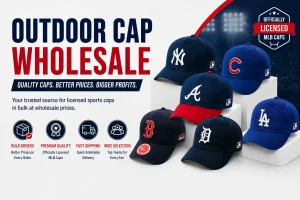 Outdoor Cap Wholesale: A Complete Guide to Buying Wholesale Outdoor Caps The demand for outdoor cap wholesale products continues to make caps an attractive category for retailers, sports stores,… Read guide →
 Where to Buy Anker Wholesale: Sourcing Guide for Electronics and Mobile Resellers Every device a customer owns is a charging problem waiting to happen, and Anker built its name on… Read guide →
 Where to Buy Owala Wholesale: Sourcing Guide for Sporting Goods and Gift Resellers The reusable water bottle went from commodity to cultural object in under a decade, and Owala rode that… Read guide →
 Where to Buy SadoTech Wholesale: Sourcing Guide for Home Improvement Resellers The wireless doorbell is the rare home product that sells itself in one sentence: no wiring, installs in… Read guide →
 Where to Buy Sennheiser Wholesale: Sourcing Guide for Music and AV Resellers Pro audio is a category where the name on the microphone decides the sale before the customer hears… Read guide →
 Where to Buy CLIF Bar Wholesale: Sourcing Guide for Grocery and Outdoor Resellers Energy bars are the rare grocery category that sells in the checkout lane, the gym bag, the trailhead,… Read guide →