Quick buyer overview
This long-form guide is now organized for faster scanning. Jump to the section you need, search other Shopye articles, or continue reading the full wholesale breakdown.
- Compare MOQ, pricing, and supplier reliability before ordering.
- Use the section index to jump straight to price, supplier, or FAQ details.
- Search more wholesale guides without leaving the article page.
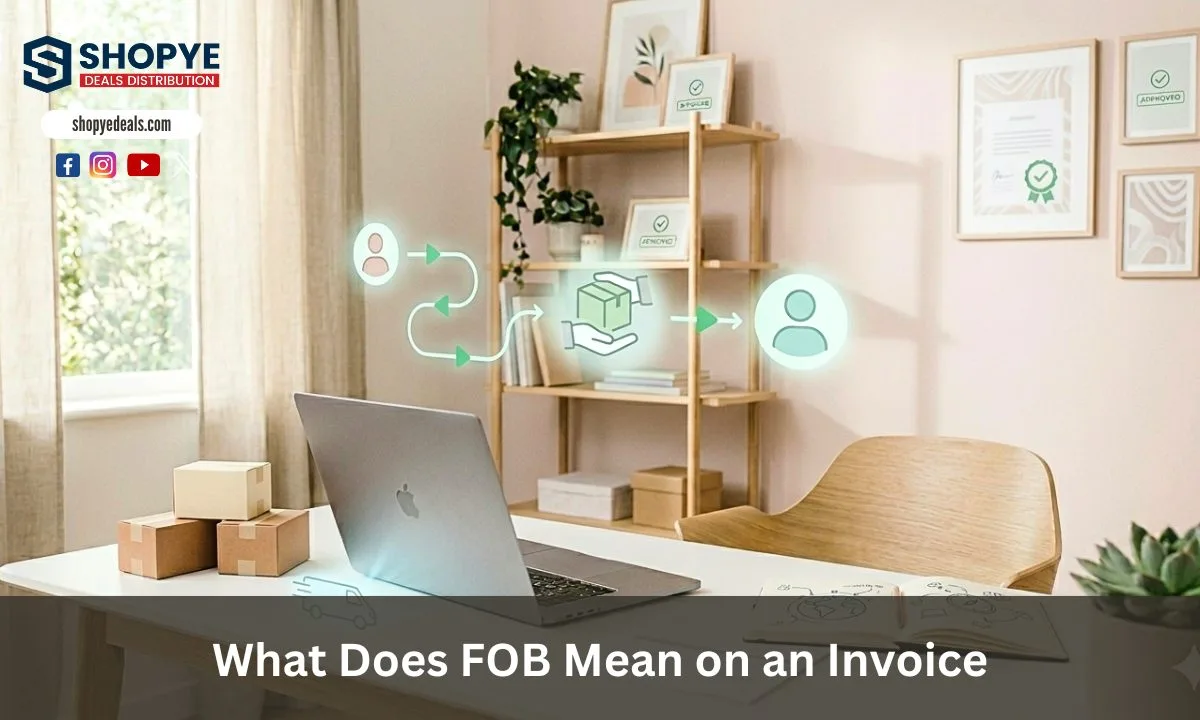
If you have ever checked a business invoice, you will have seen the term FOB. You may have paused and asked yourself what “fob” means on an invoice. Many people feel confused because it looks technical. But it directly affects who pays shipping costs and who takes the risk during delivery. This small term can determine whether the buyer or seller is responsible if goods are damaged or lost in transit.
The problem is that most invoices do not explain FOB in simple words. According to common U.S. business practice, FOB on commercial invoice terms are used in millions of invoices every year. It used to clearly set responsibility between buyer and seller.
The good news is that once you understand it, you can quickly read invoices. It helps to avoid costly mistakes in shipping and accounting decisions.
FOB Mean on Invoice

When you see shipping details on a business invoice, one of the most common terms you will notice is FOB on invoice. FOB means Free On Board. It is a shipping term that comes from international trade rules. It is widely used in the USA in business invoices, purchase orders, and shipping documents.
If you are trying to understand what FOB on invoice means on an invoice, you should know that it is not just a simple word. It is a legal and financial term. It tells you when responsibility for goods moves from the seller to the buyer.
In simple terms, FOB is a shipping term that controls three main things:
- Who pays for shipping
- Who owns the goods during transport
- Who takes the risk if goods are lost or damaged
Understanding this term helps you read invoices more correctly.
Why FOB Is Written on Invoices
FOB point on invoice is written on invoices. It clearly explains the shipping responsibility between buyer and seller. In business transactions, both parties need to know who will pay for transport. They should also know who will handle the risk during delivery.
When you look at FOB value on invoice, it mainly helps reduce confusion in trade agreements. Without FOB, it would be difficult to decide who is responsible for freight charges. It can not be known who handles damaged goods during shipping.
In supply chain and logistics, FOB on a commercial invoice used as a standard term. It helps companies manage cost planning, insurance decisions, and delivery responsibility.
FOB Shipping Point vs FOB Destination (Main Difference)
FOB has two main types, and understanding the difference is very important for you as a buyer or seller.
FOB Shipping Point means the buyer takes responsibility as soon as the goods leave the seller’s location. In this case:
- You pay the freight cost
- You take a risk during transport
- Ownership transfers at the shipping point
For example, if an FBA supplier ships products from New York and the invoice says FOB shipping point. It means you are responsible from the moment the goods leave their warehouse. This is why the FOB shipping point’s meaning is important in cost planning.
FOB Destination means the seller keeps responsibility until the goods reach your location. In this case:
- Seller pays shipping cost
- The seller takes the risk during transport
- Ownership transfers at delivery
FOB destination means the seller is responsible until delivery is complete.
The main difference between FOB origin vs destination is the timing of responsibility. In one case, the buyer takes early control. Sometimes, in the other case, the seller holds control until final delivery.
Who Pays for Shipping in FOB Terms?
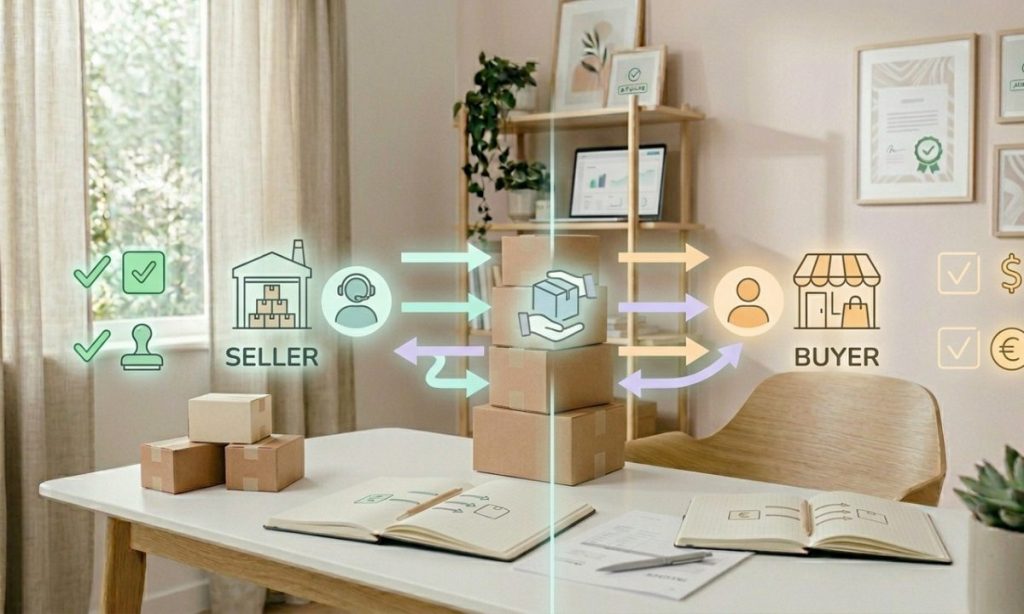
FOB also decides who pays shipping charges. This is where many people get confused.
You usually pay for shipping because responsibility transfers early at the FOB shipping point. In the FOB destination, the seller usually pays shipping. It is because responsibility stays with them until delivery.
Sometimes you will also see terms like prepaid or collect. FOB prepaid vs collect helps you understand how payment is handled:
- Prepaid means the seller pays the freight cost first
- Collect means buyer pays the freight cost on delivery
These terms appear on invoices and shipping documents. It helps to avoid confusion about freight charges responsibility.
FOB and Risk of Loss Explained
Risk of loss is one of the most important parts of FOB. It means who is responsible if goods are damaged, lost, or stolen during shipping. If the agreement is FOB shipping point, risk transfers to you once goods leave the seller. If something happens during transport, you are responsible.
If it is FOB destination, the seller keeps the risk until goods are delivered safely to you. So liability in shipping terms depends on the FOB condition written on the invoice. This is why who is responsible for damaged goods FOB is a key question in trade. It protects both buyer and seller from confusion and legal issues.
FOB in Accounting and Inventory Recording
FOB also affects accounting records and inventory recognition.
If you are using FOB shipping point, you record inventory as soon as goods leave the seller. This is called FOB accounting entry because the buyer now owns the goods in transit.
If you are using FOB destination, you record inventory only after the goods reach your location. This changes how you manage stock and financial reports. So, inventory recognition FOB is directly linked to shipping terms. Businesses must follow correct timing to avoid accounting errors.
FOB Under U.S. Business Rules (UCC Basics)
In the USA, FOB is commonly used under UCC rules, which are domestic trade laws. FOB UCC, meaning the USA helps define responsibility in local shipping agreements. It is widely used in domestic shipping terms in the USA.
However, in international trade, businesses often use Incoterms instead of only FOB. When you are dealing with global suppliers. Its impoortant you should have knowledge about Incoterms vs FOB.
Common Mistakes People Make About FOB
Many people misunderstand FOB terms in invoices. One common mistake is thinking FOB only refers to shipping cost. In reality, it also includes risk and ownership.
Another mistake is not understanding risk transfer. People often assume seller is always responsible, but that is not true in FOB shipping point.
Confusing origin and destination terms is also very common. This can lead to wrong financial decisions and unexpected shipping costs.
So, FOB confusion is explained simply. It means you must always check the exact term on the invoice before making decisions.
Conclusion
FOB is a key shipping term that tells you who pays, who owns, and who takes risk during delivery. You should always check invoices. If the invoice says shipping point or destination, it changes responsibility.
If you understand FOB point meaning on invoice clearly, it will help to clear your understanding. You can avoid mistakes in cost planning, accounting, and shipping decisions in your business.
FAQs
What does FOB mean on an invoice in the USA?
FOB on an invoice means Free On Board. It tells you when responsibility for goods moves from the seller to the buyer.
Is FOB shipping point better for the buyer?
FOB shipping point is not always better or worse. In this case, you take responsibility once goods leave the seller. It depends on how you manage cost and risk in your business.
What does FOB destination mean on an invoice?
FOB destination means the seller keeps responsibility until goods reach your location. You only take ownership when delivery is complete.
Is FOB used in accounting?
Yes, FOB is very important in accounting. It helps you decide when to record inventory and expenses.
Why is FOB mentioned on invoices?
FOB is mentioned on invoices to avoid confusion between buyer and seller. It clearly shows shipping responsibility, cost payment, and risk during transport.
More wholesale article previews
Use these related guides to compare brands, categories, and supplier options before making your next wholesale order.
 Outdoor Cap Wholesale: A Complete Guide to Buying Wholesale Outdoor Caps The demand for outdoor cap wholesale products continues to make caps an attractive category for retailers, sports stores,… Read guide →
 Where to Buy Anker Wholesale: Sourcing Guide for Electronics and Mobile Resellers Every device a customer owns is a charging problem waiting to happen, and Anker built its name on… Read guide →
 Where to Buy Owala Wholesale: Sourcing Guide for Sporting Goods and Gift Resellers The reusable water bottle went from commodity to cultural object in under a decade, and Owala rode that… Read guide →
 Where to Buy SadoTech Wholesale: Sourcing Guide for Home Improvement Resellers The wireless doorbell is the rare home product that sells itself in one sentence: no wiring, installs in… Read guide →
 Where to Buy Sennheiser Wholesale: Sourcing Guide for Music and AV Resellers Pro audio is a category where the name on the microphone decides the sale before the customer hears… Read guide →
 Where to Buy CLIF Bar Wholesale: Sourcing Guide for Grocery and Outdoor Resellers Energy bars are the rare grocery category that sells in the checkout lane, the gym bag, the trailhead,… Read guide →