Quick buyer overview
This long-form guide is now organized for faster scanning. Jump to the section you need, search other Shopye articles, or continue reading the full wholesale breakdown.
- Compare MOQ, pricing, and supplier reliability before ordering.
- Use the section index to jump straight to price, supplier, or FAQ details.
- Search more wholesale guides without leaving the article page.
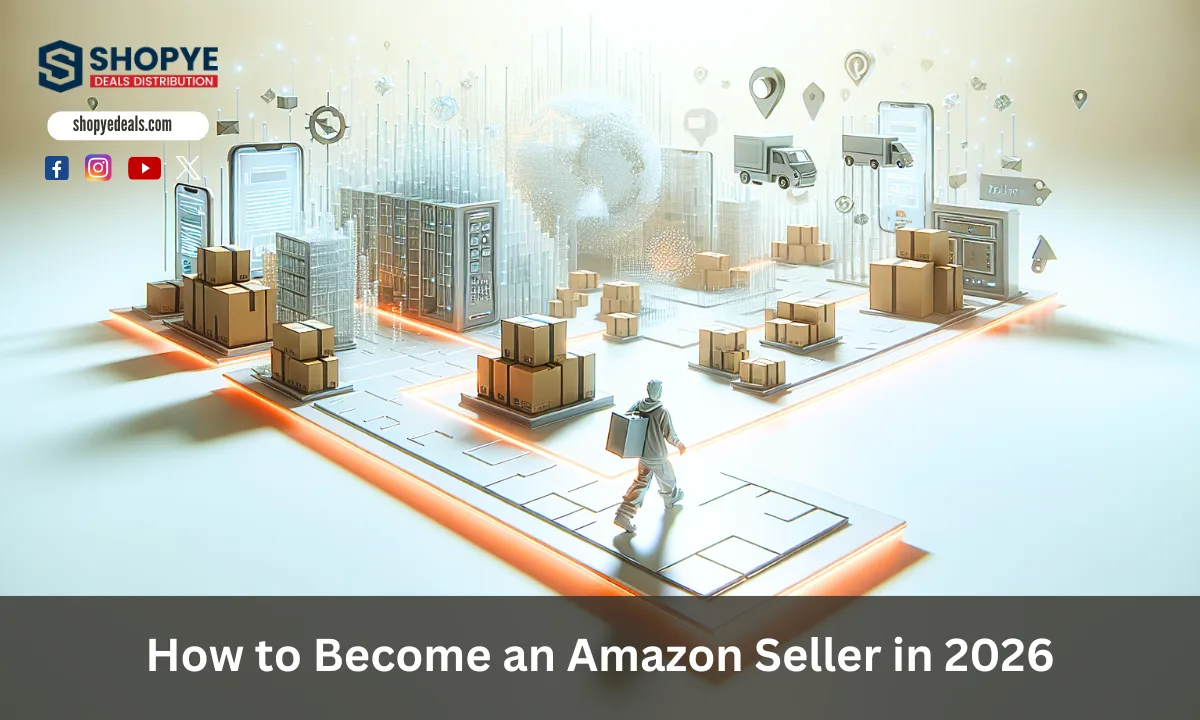
Becoming an Amazon seller in 2026 is no longer a casual process. Today, Amazon has shifted to a professional, brand-first approach, which means you need more than just a product to start selling. If you want to succeed, you must have a clear business structure, a verified identity, and a strategy for protecting your brand. Knowing how to become an Amazon seller now requires understanding the rules, compliance, and tools that help your products stand out in a competitive marketplace.
One of the biggest changes in 2026 is the focus on professional infrastructure. Amazon expects you to have your legal and tax documents ready, your identity verified, and your business registered properly. You also need to ensure your products are associated with a legitimate brand. This brand-first mentality helps protect your listings from copycats and ensures your products can benefit from advanced features like A+ Content and Brand Registry 3.0.
Another important aspect is using modern tools to auto-find profitable products. These tools help you discover what buyers are searching for, which products sell quickly, and how to price them to maximize profit. By leveraging automation and AI insights, you can focus on the right products that have high demand and low competition.
In short, learning how to become an Amazon seller in 2026 is about preparation, verification, and strategy. It is not just about listing items but building a professional, trustworthy, and profitable selling business from the start. You need to understand Amazon’s systems, protect your brand, and use smart tools to identify the products that will sell best in today’s market.
Pre-Verification Audit: Prepare Your Documents
Before you even click “Sign Up” to start selling on Amazon, it is critical to align all your digital paperwork. In 2026, Amazon’s Identity Verification process is more strict than ever, and even small mismatches can delay or block your application. You need to ensure that your personal information, business documents, and financial records all match perfectly. This step is not just a formality—it is the foundation for getting your account approved and maintaining long-term account health.
Amazon now uses advanced tools like Facial Recognition and two-factor authentication (2FA) to confirm your identity. During registration, Amazon may compare your uploaded documents to your live video verification, which means your digital paperwork must be accurate and clear. A single typo in your name or address can fail the Match Check, so you must carefully review every document before submission.
Start by scanning your government-issued ID, ensuring the scan is clear and all edges are visible. Then, prepare your bank statements and credit card information to match the name on your ID exactly. Avoid using prepaid cards, as Amazon no longer accepts them for seller verification. For proof of address, scan a utility bill or bank statement issued within the last 180 days. Make sure the document is legible, and all text is visible, as Amazon’s AI may automatically reject low-quality uploads.
By taking the time to validate and authenticate each document, and by carefully scanning your ID, bank statements, and proof of address, you will reduce delays and increase your chances of approval. This pre-verification step sets the stage for a smooth onboarding process and ensures you are ready for Amazon’s live identity checks and further compliance requirements.
Live Identity Verification

Once your digital paperwork is perfectly aligned, the next step is Video Call Verification, which is a mandatory part of becoming an Amazon seller in 2026. Amazon now requires most new accounts to join a live verification call where an associate will confirm your identity. This process ensures that the person registering the account is the same as the one on the documents you uploaded. It also helps prevent fraud and maintains trust in the Amazon marketplace.
During the video call, you will be asked to hold up your government-issued ID to the camera while the Amazon associate compares it to your uploaded scans. In many regions, Amazon uses AI-powered face scanning to automatically authenticate your identity. The system compares your live image with your ID photo to make sure they match. With this technology, most accounts are approved within 24 to 48 hours, although delays can occur if your documents are unclear or your camera setup is poor.
To pass verification smoothly, make sure your environment is well-lit so your face and ID are clearly visible. Keep your camera steady and avoid wearing hats or sunglasses. Ensure your ID is not expired and that all text is legible. During the call, speak clearly and follow instructions carefully. You should also have your documents ready to scan or show to the camera, so the process is fast and uninterrupted.
By preparing ahead and following these tips, you can authenticate your identity efficiently and move forward to the next steps of onboarding. This video verification is not just a formality—it is a critical step to secure your account, protect your business, and maintain compliance with Amazon’s strict 2026 standards.
Choosing Your Amazon Seller Plan
After your identity is verified, the next step is to decide which seller plan fits your goals. Amazon offers two main options in 2026: the Individual Plan and the Professional Plan. Understanding the differences between these plans is essential if you want to grow your business efficiently and maximize profits.
The Individual Plan charges $0.99 per item sold, making it a good choice if you are just testing 1–2 products or selling personal items. However, this plan does not give you access to the Buy Box, Amazon ads, or certain 2026 seller incentives. If your goal is to sell casually or try out the platform without monthly commitments, this plan can work, but it limits your ability to scale.
The Professional Plan, on the other hand, costs $39.99 per month and is designed for sellers who want to expand. With this plan, you gain access to the Buy Box, which increases your chances of sales since it is the primary “Add to Cart” button buyers use. You can also run Amazon ads to promote your products and take advantage of 2026 seller incentives, which may include up to $50,000 in credits or bonuses. This plan also allows you to use advanced fulfillment options like FBA (Fulfillment by Amazon) or FBM (Fulfilled by Merchant), and handle shipping with Inbound Placement Fees efficiently. Using FBA can help you replenish stock automatically while ensuring fast delivery to customers.
To choose the right products to sell, you can use auto find tools that analyze market trends, demand, and competition. These tools help you identify profitable items, calculate fees, and decide whether FBA or FBM is the best fulfillment option for your business. By combining these insights with the right seller plan, you can build a stronger, more professional Amazon store in 2026.
Making the right choice between Individual and Professional plans sets the foundation for your growth, efficiency, and long-term success on Amazon. Selecting the Professional Plan with proper tools to auto-find profitable products will help you scale faster while maintaining compliance and maximizing profits.
Securing Your Brand with Brand Registry 3.0
In 2026, branding is no longer optional for Amazon sellers. Amazon requires that your products be associated with a verified brand to ensure quality, prevent counterfeits, and maintain trust in the marketplace. This means you cannot simply sell generic items under a vague label. By establishing a strong brand, you gain access to advanced tools and protections that help you stand out from competitors and grow your business.
One of the most important tools for sellers is Brand Registry 3.0. This program allows you to manage your product listings, protect your intellectual property, and use features like A+ Content to improve your listings’ visibility. If you do not yet have a registered trademark, Amazon’s IP Accelerator can help you quickly get started. The IP Accelerator connects you with vetted law firms that can file your trademark, allowing you to ungate your brand privileges while your trademark is still pending.
To comply with Amazon’s 2026 requirements, you must also prove that your brand is permanently affixed to your products. Temporary labels or stickers are no longer accepted. Instead, your brand name or logo should be etched, sewn, or printed directly on the product or its packaging. This ensures authenticity and prevents copycats from replicating your products. If you sell clothing, for example, your brand should be sewn into tags or labels. For electronics or kitchen tools, etching or printing directly onto the product is preferred.
Following these steps will help you onboard your brand securely and maintain access to Amazon’s premium tools. Permanent branding, combined with Brand Registry 3.0 protections, ensures that your products remain protected and visible to buyers. By taking branding seriously, you are not just meeting Amazon’s requirements—you are building a professional, trustworthy business that can scale successfully in 2026.
Launching Products Optimized for AI Discovery

Once your brand is secured, the next step is to optimize your products for Amazon’s AI shopping assistant, Rufus, which plays a central role in 2026’s buying experience. Rufus is designed to understand what buyers are really looking for, answer their questions, and recommend products that match their needs. This means that simply listing features is no longer enough—you must write your product descriptions and bullet points in a way that answers buyer questions directly.
This is where Semantic Search becomes crucial. Instead of just describing your product, you write your bullet points to solve buyer problems. For example, instead of saying “kitchen cabinet organizer, 12 inches,” you could phrase it as, “Fits under standard kitchen cabinets to maximize storage space and keep items organized.” Semantic Search helps Rufus match your product with what buyers are asking, improving visibility and increasing sales.
To make your listings even more effective, use tools that auto-find profitable products and keywords. These tools analyze market demand, competition, and buyer search behavior, helping you identify which product listings need optimization. By incorporating these insights into your bullet points, titles, and descriptions, you ensure your products are discoverable by both buyers and Rufus.
In addition, consider your inventory strategy when optimizing for AI. Use FBA to replenish stock automatically, so high-demand items remain available, and your listings continue to perform well. Each listing should also be authenticated, with clear branding and accurate product details, to maintain buyer trust and comply with Amazon’s 2026 standards.
Optimizing for AI discovery is not just a technical requirement—it is a strategy that ensures your products are seen by the right buyers, answers their questions before they ask, and keeps your inventory moving efficiently. By combining semantic search, auto find insights, and proper inventory management, you set your store up for long-term growth and profitability.
Maintaining Account Health
Once your products are listed and optimized for Amazon’s AI shopping assistant, it is essential to focus on account health. Amazon uses several key metrics to monitor how well sellers perform and ensure a positive experience for buyers. These metrics include IPI Score, ODR, VHR, and your overall Account Health Rating.
Your Inventory Performance Index (IPI) Score measures how efficiently you manage your stock. Low IPI scores can result in storage limits or higher fees, while high scores signal that you are effectively managing inventory and keeping products available for buyers. Order Defect Rate (ODR) tracks customer complaints, negative feedback, and issues like returns or A-to-Z Guarantee claims. Keeping your ODR low is crucial, as high defect rates can lead to account suspension. Voice of the Customer (VHR) reflects buyer satisfaction with your products and services, including reviews and ratings. Your Account Health Rating combines these metrics to give an overall view of your performance, influencing your eligibility for perks like Buy Box placement.
Amazon enforces strict penalties for sellers who do not maintain these standards. For example, aged inventory fees apply to slow-moving stock stored in FBA warehouses for 12–15 months. Similarly, poor order fulfillment or defects can negatively impact your ODR, reducing sales and harming your reputation.
To maintain top performance, focus on keeping your stock fresh and replenishing inventory regularly. Use FBA to automatically replenish high-demand items, monitor slow-moving products, and adjust your listings based on sales trends. Ensure your listings are accurate, your branding is consistent, and customer questions are answered promptly to minimize complaints. Proactive inventory management, timely fulfillment, and attention to customer satisfaction are the keys to achieving high scores across all account health metrics.
By understanding these metrics and taking steps to avoid penalties, you not only protect your account but also improve your visibility, boost sales, and build a trustworthy reputation on Amazon.
2026 Seller Fees Overview
Understanding Amazon’s fee structure is essential for managing your costs and maximizing profits as a seller in 2026. Fees affect every aspect of your business, from listing and fulfillment to inventory management, so knowing how they work will help you plan strategically. Key fees include referral fees, FBA handling fees, inbound placement fees, and aged inventory fees.
Referral Fees are a percentage of your total sale, typically ranging from 8% to 15%, depending on the product category. This is Amazon’s commission for connecting you with buyers. To minimize costs, choose product categories carefully and price your items to cover fees while remaining competitive.
FBA Handling Fees apply when you use Fulfillment by Amazon. These fees cover storage, picking, packing, and shipping your items. If you use FBM (Fulfilled by Merchant), you handle shipping yourself, which can reduce fees but requires more effort. To manage FBA costs, optimize your packaging size and weight, and use Amazon’s replenish tools to send stock in the right quantities to avoid unnecessary storage fees.
Inbound Placement Fees are charged when you ship inventory to a single Amazon warehouse. These fees can be tiered, but they are often waived if you split shipments strategically across multiple locations. Planning your inbound shipments carefully can reduce unnecessary costs and speed up inventory availability.
Aged Inventory Fees apply to slow-moving stock stored in FBA warehouses for 12–15 months. These fees can quickly reduce your profit margins, so it is essential to monitor your inventory regularly. Use Amazon’s reports to identify slow sellers and consider promotions, discounts, or removal orders to prevent fees from accumulating.
To minimize fees overall, use a combination of strategies: select the right fulfillment method (FBA or FBM) based on your product type, monitor stock levels and sales velocity to replenish efficiently, optimize packaging to reduce handling costs, and carefully plan inbound shipments. By staying proactive and managing these fees, you can maintain healthy margins while growing your business successfully in 2026.
Recap & Next Steps
Becoming an Amazon seller in 2026 follows a clear 5-step framework designed to help you start your business professionally and successfully. Understanding and completing each step ensures that your account is verified, your brand is protected, and your products are optimized for both buyers and Amazon’s AI shopping assistant, Rufus.
The first step is the Pre-Verification Audit, where you align your digital paperwork. You need to validate and authenticate your government ID, bank statements, and proof of address, ensuring that all details pass Amazon’s strict Identity Verification and Match Check requirements.
Next is the Live Identity Verification step. Through a Video Call Verification, Amazon confirms your identity using AI-powered face scanning. Preparing in advance and scanning your documents clearly helps speed approval and prevents delays.
The third step is Choosing Your Seller Plan. You can select between the Individual Plan, which is suitable for testing a few products, or the Professional Plan, which gives you access to the Buy Box, ads, and 2026 seller incentives. Using auto find tools at this stage can help you identify profitable products to sell and decide which plan will maximize your potential.
Step four is Securing Your Brand through Brand Registry 3.0 and, if necessary, Amazon’s IP Accelerator. You must ensure your brand is permanently affixed to your products—etched, sewn, or printed—so buyers can trust the authenticity of your items. This step protects your intellectual property and allows you to unlock premium brand features.
The final step is launching with AI Optimization. By using Semantic Search, you write bullet points and descriptions that answer buyer questions and help Rufus recommend your products effectively. Combined with auto find features, you can optimize listings, manage inventory efficiently, and replenish stock strategically to meet demand.
By following this 5-step framework, you set a strong foundation for long-term success on Amazon. Using tools to auto-find profitable products and optimizing listings for AI ensures that your business is both visible and competitive. Understanding how to become an Amazon seller in 2026 is no longer just about listing items—it is about building a professional, trustworthy, and growth-ready business from the start.
FAQs
How do I become an Amazon seller in 2026?
Becoming an Amazon seller in 2026 requires following a professional and structured process. You need to complete a pre-verification audit by preparing and scanning your government ID, bank statements, and proof of address to pass Amazon’s Identity Verification. Next, you will participate in a Video Call Verification, where your identity is authenticated through live video and AI-powered face scanning.
After verification, you choose a seller plan, secure your brand through Brand Registry 3.0 or the IP Accelerator, and optimize your product listings for Semantic Search and AI discovery. This step-by-step approach ensures your account is compliant, your brand is protected, and your products are visible to buyers and Amazon’s AI assistant, Rufus.
Can I auto-find profitable products to sell on Amazon?
Yes, using tools that auto-find profitable products is one of the smartest ways to start selling and then partnering with the best Amazon wholesale distributors. These tools analyze market trends, search volume, competition, and pricing to identify items with high demand and low competition. They help you decide which products to list, which seller plan to choose, and how to price your items to maximize profits.
Combining these insights with AI-optimized listings and inventory management allows you to stay competitive in Amazon’s 2026 marketplace.
Do I need a trademark to sell on Amazon?
While you can start selling without a registered trademark, having one is highly recommended. A trademark allows you to enroll in Brand Registry 3.0, giving you protection from copycats and access to premium features like A+ Content.
If you do not yet have a trademark, Amazon’s IP Accelerator helps you work with vetted law firms to obtain one while enabling you to ungate brand privileges. Permanent branding—etched, sewn, or printed on your products—is required to fully protect your items in 2026.
How does Amazon verify my identity in 2026?
Amazon uses a strict verification process that includes document checks and live video verification. During the Video Call Verification, you hold your ID up to the camera while Amazon’s AI system performs facial recognition to authenticate your identity. This process usually takes 24–48 hours if your documents are clear and match exactly.
Amazon may also require a Match Check to ensure names and addresses on your ID, bank statements, and credit cards are consistent. Preparing documents carefully and scanning them clearly will help you pass verification smoothly.
What are the Amazon seller fees in 2026?
Amazon charges several fees that impact your profitability. Referral fees range from 8% to 15% of the sale, depending on the product category. FBA handling fees cover storage, picking, packing, and shipping if you use Fulfillment by Amazon, while FBM (Fulfilled by Merchant) allows you to handle shipping yourself. Inbound Placement Fees apply when sending inventory to warehouses, and Aged Inventory Fees are charged for slow-moving products stored for over 12–15 months.
To minimize fees, plan inbound shipments carefully, optimize packaging, and use FBA tools to replenish stock efficiently. Monitoring inventory and using auto find tools for profitable products helps you avoid unnecessary costs while maximizing sales.
More wholesale article previews
Use these related guides to compare brands, categories, and supplier options before making your next wholesale order.
 SKIN1004 Wholesale Distributor | Bulk Skincare Distribution Looking for SKIN1004 wholesale products can be a smart move for retailers, online sellers, beauty stores, and resellers… Read guide →
 Skincare Wholesale Distributors USA: A Practical Sourcing Guide for Retailers For retailers looking for reliable skincare wholesale distributors USA, Shopye Deals Distribution provides a practical B2B sourcing option… Read guide →
 Where to Buy NINELESS Wholesale: Sourcing Guide for Resellers If you are deciding where to buy nineless wholesale, start with a plain thesis. Buy a focused serum… Read guide →
 Where to Buy EUNYUL Wholesale: Sourcing Guide for Resellers If you are asking where to buy eunyul wholesale, you are asking a practical sourcing question, not a… Read guide →
 Where to Buy NACIFIC Wholesale: Sourcing Guide for Resellers If you are deciding where to buy NACIFIC wholesale, start with the question that matters most: can you… Read guide →
 Where to Buy Dr.Althea Wholesale: Sourcing Guide for Resellers The Sourcing Thesis Resellers who ask where to buy Dr.Althea wholesale are usually asking a simpler question underneath… Read guide →