Do you have a closet full of clothes you no longer wear and wonder if they could be turned into extra cash? If you’re asking, “can i sell used clothes on amazon,” you’re not alone. Thousands of people across the USA are looking for ways to make money from pre-owned clothing instead of letting it sit unused.
The problem is that many sellers are unsure whether Amazon allows used clothing, what condition the items must be in, or whether selling second-hand apparel is worth the effort. Because of this uncertainty, valuable items often remain untouched while potential profits are left on the table.
The good news is that Amazon does allow certain used products to be sold, but there are specific category rules and condition requirements you need to understand before listing your items. Knowing these guidelines can help you avoid account issues and increase your chances of making successful sales.
In fact, the U.S. resale market has grown significantly in recent years as more shoppers look for affordable and sustainable fashion options. In this guide, you’ll learn whether you can sell used clothes on Amazon, the rules you must follow, and the best practices for turning unwanted clothing into a profitable online business.
How Amazon Classifies Apparel Listings
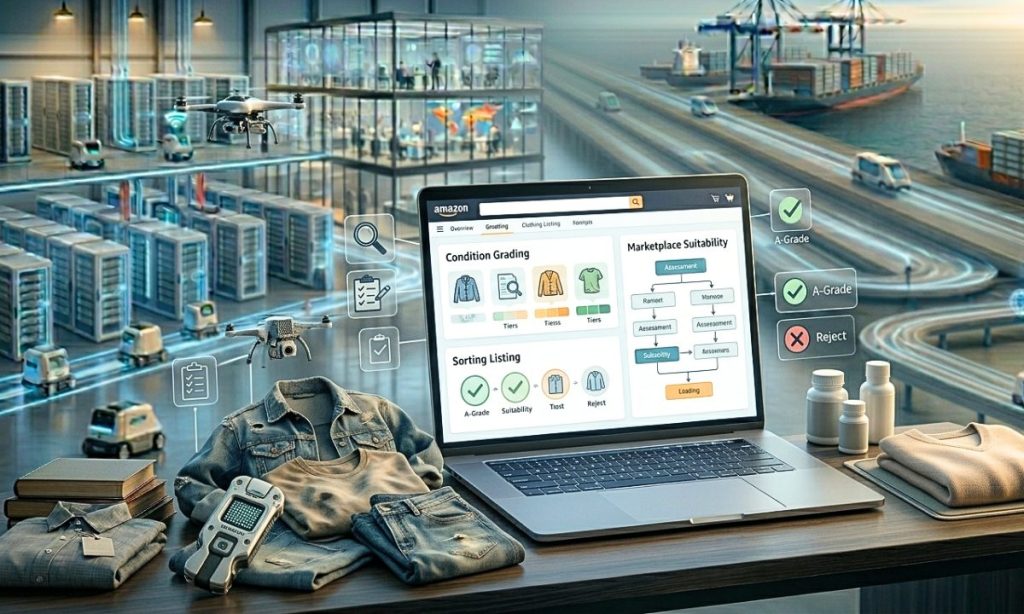
In structured catalog systems, apparel listings must follow strict condition rules. In most cases, clothing must be listed as new, new with tags, or in rare approved collectible categories.
On Amazon, product eligibility is not only based on category but also on condition metadata. The system checks seller type, product details, and compliance history before allowing listings.
If your product does not meet allowed conditions, the system may reject it automatically or prevent it from entering the marketplace review stage. This helps maintain a clean product catalog and reduces listing errors in high-volume categories like fashion.
Why Used Clothing Is Restricted on Amazon

There are several business reasons behind this restriction.
First is high return rate. Clothing already has frequent returns due to sizing issues. Used clothing increases uncertainty even more because wear and condition vary from item to item.
Second is hygiene and quality control. Pre-owned garments are difficult to standardize, and large marketplaces depend on predictable product quality.
Third is brand protection. Platforms like Amazon work with global brands and must reduce counterfeit and misrepresentation risks. Used clothing makes verification more difficult.
Fourth is catalog consistency. Large e-commerce systems rely on structured data. Used items introduce too much variation, which reduces search accuracy and product matching quality.
NLP Keyword Expansion in E-commerce Systems
Modern NLP systems not only read your query. They expand it into operational signals such as restricted category detection, listing eligibility rules, fulfillment compliance metrics, and product identifier validation.
Your simple question is transformed into a structured decision request. The system evaluates whether your product fits catalog rules and marketplace standards.
This process also connects with what can be understood as an “auto-find” behavior. The system tries to interpret your intent and guide it into one of three paths: approval, rejection, or alternative recommendation. This helps users find valid selling options even when the original request is restricted.
What You Can Sell Instead of Used Clothes on Amazon
If you want to sell clothing, you still have strong options, but you must adjust your model.
New apparel is the safest option. You can sell brand-new clothing that meets condition requirements on Amazon.
Print-on-demand is another strong model. You upload designs, and products are created only after customers order. This removes inventory risk and fits well with structured e-commerce systems.
Collectible or vintage clothing may be allowed in rare cases, but it requires manual approval. It is not guaranteed and depends on product uniqueness and documentation.
Private label branding is a long-term strategy. You create your own brand, source new products, and build a consistent catalog that aligns with marketplace rules.
Alternative Platforms for Used Clothing Sellers
If your focus is on used clothing, you should use platforms designed for resale.
Peer-to-peer marketplaces allow direct selling without strict catalog rules. Thrift and vintage platforms focus on second-hand fashion and attract buyers looking for unique items. Social commerce ecosystems also support resale through community-based selling.
Instead of forcing used inventory into restricted systems like Amazon, you should align your products with platforms built for second-hand trade.
FAQs
Can I sell used clothes on Amazon?
In most cases, you cannot sell standard used clothing on Amazon through third-party seller accounts. The platform mainly supports new apparel listings with strict condition rules.
Why does Amazon restrict used clothing?
The restriction exists due to high return rates, hygiene concerns, brand protection risks, and the need for a consistent product catalog structure.
What happens if I try to list used apparel?
Your listing is likely to be rejected or blocked before it becomes active. Repeated violations may also affect your seller account health over time.
What is the best alternative platform for used clothes?
Peer-to-peer marketplaces, thrift-focused platforms, and social resale ecosystems are better suited for used clothing because they support second-hand inventory.
Can I sell vintage clothes on Amazon?
Vintage clothing may sometimes be allowed, but only in specific cases with approval. It depends on whether the item qualifies as collectible or rare, not just used.