Have you found a popular branded product and wondered whether you can legally sell it on Amazon for a profit? If you’re asking, “can i sell branded products on amazon,” you’re not alone. Thousands of new sellers in the USA want to tap into the demand for well-known brands but are unsure about Amazon’s rules and restrictions.
The problem is that many branded products come with approval requirements, intellectual property protections, and category restrictions that can confuse beginners. As a result, sellers may avoid profitable opportunities or risk listing products incorrectly and facing account issues.
The good news is that Amazon allows third-party sellers to offer many branded products, provided they meet the platform’s requirements and can prove their products are authentic. Understanding these rules can help you build a compliant and profitable Amazon business from the start.
In fact, branded products often attract more customer trust and higher search demand than unknown alternatives, making them a popular choice among Amazon sellers. In this guide, you’ll learn whether you can sell branded products on Amazon, what restrictions may apply, and the steps needed to sell legally and successfully in the USA marketplace.

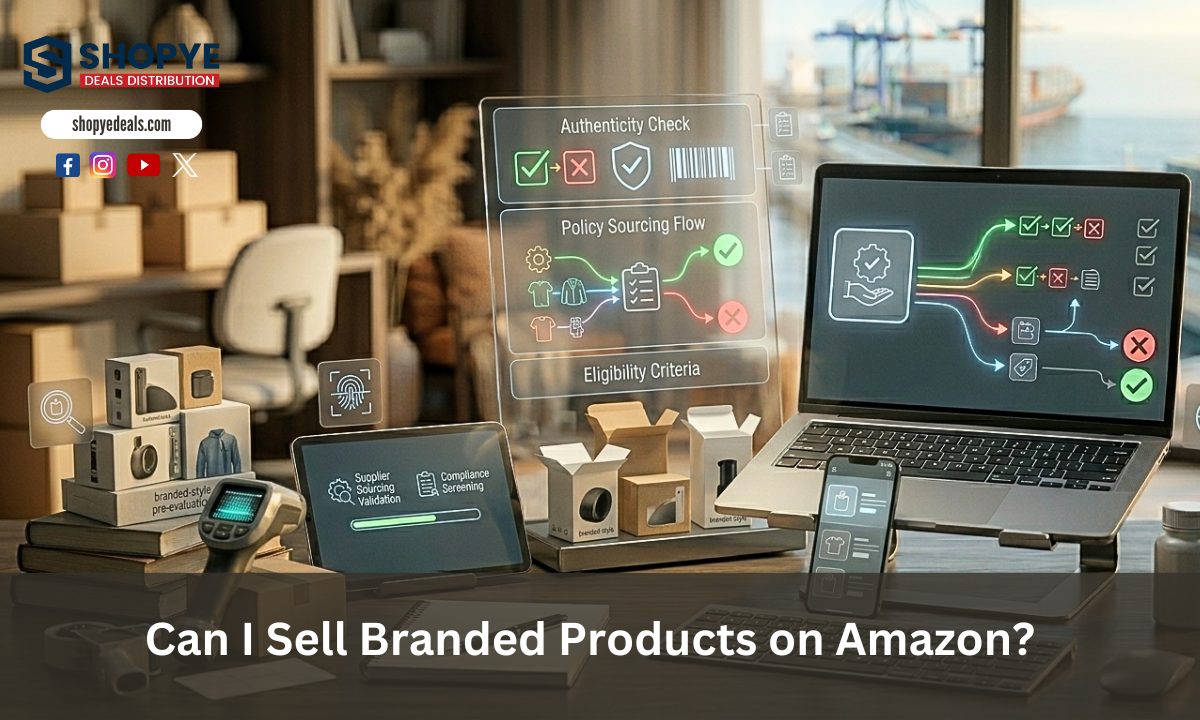
How Amazon Evaluates Branded Product Listings
Amazon uses product classification systems and brand registry programs to determine whether a branded product can be listed. These systems help verify authenticity and protect brand owners from unauthorized sellers.
Some brands are open to most sellers, while others are restricted. If a brand is protected, you may need approval before listing products. You can hire top agencies like Shopyedeals for FBA suppliers. Amazon evaluates factors such as product category, brand policies, seller history, and sourcing documentation.
The platform also uses counterfeit prevention measures to reduce the risk of fake products entering the marketplace. This is why documentation and product authenticity are so important when selling branded items.
What Is Brand Gating on Amazon?
Brand gating is Amazon’s approval system for certain brands and categories. If a product is gated, you must receive approval before listing it for sale.
Amazon applies brand gating to improve customer trust, protect intellectual property, and maintain product quality standards. This process helps ensure that only qualified sellers can offer specific branded products.
Ungated products can usually be listed without additional approval. Gated products require documentation and verification before they can be sold.
If you attempt to list a gated product without approval, Amazon may block the listing or remove it entirely. Repeated violations can negatively affect your seller account.
Requirements to Sell Branded Products Legally

The most common requirement for selling branded products is a wholesale invoice from an authorized supplier. This document proves that your inventory comes from a legitimate source.
Some brands may also require a Letter of Authorization (LoA). This document confirms that the brand owner permits you to sell its products.
In certain situations, brands may expect sellers to meet minimum order quantities before approving. This requirement helps brands work with serious business partners rather than occasional resellers.
Using legitimate sourcing channels is critical. Purchasing inventory from authorized distributors, wholesalers, or directly from brands provides stronger documentation and reduces compliance risks.
Common Ways Sellers Source Branded Products
Wholesale sourcing is the most reliable method. You purchase inventory directly from authorized distributors and receive proper invoices for verification purposes.
Retail arbitrage involves buying discounted products from local stores and reselling them online. While this method is allowed in some situations, retail receipts may not always meet Amazon’s documentation requirements.
Online arbitrage follows a similar model but uses online retailers instead of physical stores. This approach carries a higher risk when dealing with branded products because documentation may not be accepted during approval reviews.
Direct partnerships with brands offer the strongest long-term solution. Working directly with brand owners often provides better pricing, reliable inventory, and easier compliance management.
What Happens If You Don’t Follow Amazon Rules?
Failing to follow Amazon policies can lead to serious consequences. The most common issue is listing removal, which immediately stops product sales.
Amazon may also suspend your seller account if it detects repeated policy violations or unauthorized inventory. Intellectual property complaints from brands can further damage your account health.
In severe cases, sellers may lose access to restricted categories or have their selling privileges permanently revoked. Following Amazon’s rules is essential for building a sustainable business.
How to Safely Start Selling Branded Products
The safest way to begin is by focusing on ungated categories. These products usually have fewer restrictions and allow you to gain marketplace experience.
Building a positive seller history is equally important. Good performance metrics and policy compliance can improve your chances of receiving future approvals.
When applying for brand approvals, start gradually and keep all sourcing documents organized. Maintaining invoices and supplier records makes the verification process much easier.
FAQs
Can I sell any branded product on Amazon without permission?
No. Some brands are open to sellers, while others require approval before listing. Always check the brand’s selling requirements before sourcing inventory.
Do I need invoices to sell branded items on Amazon?
In many cases, yes. Wholesale invoices are commonly used to verify that products come from authorized sources and meet Amazon’s compliance requirements.
What is the easiest way to get ungated?
The easiest approach is to purchase inventory from authorized distributors, maintain proper invoices, and build a positive seller account history before applying for approval.
Is retail arbitrage allowed for branded products?
Retail arbitrage is generally allowed, but retail receipts may not always satisfy Amazon’s verification requirements for restricted brands.
How does Amazon verify branded inventory?
Amazon reviews invoices, supplier information, brand registry records, and seller account activity to confirm product authenticity and compliance.
Conclusion
Yes, you can sell branded products on Amazon, but success depends on following the platform’s rules. Amazon uses approval systems, brand protection measures, and compliance checks to control how branded inventory enters the marketplace.
The key to long-term success is proper sourcing. Working with authorized distributors, maintaining accurate invoices, and following approval requirements help protect your account and build credibility.