

Quick buyer overview
This long-form guide is now organized for faster scanning. Jump to the section you need, search other Shopye articles, or continue reading the full wholesale breakdown.
- Compare MOQ, pricing, and supplier reliability before ordering.
- Use the section index to jump straight to price, supplier, or FAQ details.
- Search more wholesale guides without leaving the article page.
Many people in the USA want extra income. But most of them do not know where to start or which online business is actually worth their time.
If you are searching for how to make money on Amazon FBA, you are not alone. Most beginners enter Amazon without understanding how profit really works in 2026. They end up losing money on fees, ads, and poor product choices.
The real issue is not Amazon itself, but the lack of a clear system. Many people jump in with high expectations. But they do not understand business models and cost structure. They didn’t know how Amazon’s updated fee system would affect earnings.
In this guide, you will learn how Amazon FBA actually works today. What it takes to build a profitable system. How can you avoid the common mistakes that stop beginners from making a real income?
What Does “Making Money on Amazon FBA” Really Mean in 2026

When people talk about Amazon FBA income, many of them think about total sales. But in real business terms, sales do not matter as much as profit. In 2026, making money on Amazon FBA means focusing on net profit, not revenue.
Net profit is the real money you keep after all costs. Many sellers see high sales but still lose money because their expenses are too high. This is why understanding Amazon FBA profit margins is very important. A healthy business usually targets 15% to 35% net margin. If your margin is lower than this, your business becomes risky.
Revenue is the total money you make from sales. Income is what you actually keep. These two are not the same. For example, you can sell $10,000 worth of products, but after fees, ads, and product cost, you may only keep $1,500 or even less.
Cash flow is another important concept. It means how money moves in your business. You sell products, earn a profit, and then reinvest it to buy more inventory. This cycle helps you grow. Without proper cash flow, your business stops growing even if you are making sales.
Best Amazon FBA Business Models You Can Use
Private Label (High Profit Model)
Private label means you create your own brand. You find a product, improve it, and sell it under your brand name. This model gives you full control over pricing, branding, and marketing.
This is the most powerful Amazon private label business model. It allows long-term growth. You can build brand value and increase your margins over time. Successful sellers in this model often target 25% or higher profit margin. However, it requires more effort and investment in branding and marketing.
Wholesale Model (Stable Cash Flow)
Wholesale means you buy products from existing brands through wholesale suppliers for Amazon FBA and resell them on Amazon. You do not build a brand; instead, you focus on selling already successful products.
This Amazon wholesale business model is less risky because products already have demand. However, competition is higher, and margins are lower, usually between 8% and 15%. It is a good choice for beginners who want a stable income.
Online Arbitrage (Low Entry Model)
Online arbitrage means you buy discounted products from online stores. Then resell them on Amazon. This is one of the fastest ways to start.
The Amazon arbitrage meaning is simple: buy low, sell high. It requires low investment but is very competitive. You need good research skills to find profitable deals. This model is often used for quick cash flow, but not long-term scaling.
Amazon FBA Costs You Must Understand Before You Start

To understand Amazon FBA fees explained, you need to know all the cost parts clearly.
- First is the referral fee. Amazon takes a percentage from every sale. This depends on the product category.
- Second is the fulfillment fee. This covers packing, shipping, and handling by Amazon.
- Third is the storage fee. You pay Amazon for keeping your products in their warehouse.
In 2026, there is also a 3.5% fuel surcharge impact. This increases your cost slightly but affects all sellers.
Another major cost is PPC advertising. You must run ads to get visibility. Many experts treat PPC as a “mandatory tax” because without it, your product may not get traffic.
How to Make Money on Amazon FBA (Step-by-Step Profit Guide 2026)
If you want to learn how to start Amazon FBA, you need a clear process.
Step 1: Choose your business model based on your budget and risk level.
Step 2: Find a profitable product by analyzing demand and competition.
Step 3: Source your product from a supplier with good quality and price.
Step 4: Send inventory using the Amazon AWD or FBA system.
Step 5: Optimize your listing using SEO keywords so customers can find you.
Step 6: Run PPC campaigns to bring traffic and sales.
This is the basic Amazon FBA step-by-step system used by most sellers.
How Amazon Supply Chain (AWD + FBA) Helps You Scale
Amazon’s supply chain program in 2026 is more advanced. It connects storage, shipping, and delivery into one system.
AWD means Amazon Warehousing and Distribution. It helps you store products at a lower cost before sending them to FBA.
This system reduces Amazon FBA storage fees and helps with better inventory management. It also improves automation and reduces delays.
How to Calculate Real Profit on Amazon FBA
Real profit is calculated using a simple Amazon FBA profit formula:
Retail Price – (COGS + Amazon Fees + PPC + Surcharge) = Net Profit
This Amazon FBA profit calculator method helps you understand true earnings.
Many beginners fail because they ignore hidden costs. If you do not track net margin, you may think you are earning but actually losing money.
Conclusion
Amazon FBA is still profitable in 2026, especially in the USA market. But success is not based on luck. It depends on system understanding, cost control, and smart scaling.
You should focus on net profit and business models. If you also focus on long-term strategy, you can build a strong Amazon business that grows over time.
FAQs
How much money do you need to start Amazon FBA?
You usually need around $500 to $5,000, depending on your business model. Online arbitrage is cheaper, while private label needs more investment.
Can beginners still make money on Amazon FBA in the USA?
Yes, beginners can still make money. But only if they understand costs and choose the right product. Follow a proper system instead of guessing.
Which Amazon FBA business model is best for beginners?
Wholesale and online arbitrage are better for beginners. They are lower risk and easier to start compared to private label.
How long does it take to make a profit on Amazon FBA?
Most sellers take 2 to 6 months to see a stable profit. It depends on product research, marketing, and inventory planning.
Is Amazon FBA a good side hustle in 2026?
Yes, it is still a good side hustle. It requires consistent effort, PPC understanding, and proper profit tracking to succeed.
More wholesale article previews
Use these related guides to compare brands, categories, and supplier options before making your next wholesale order.
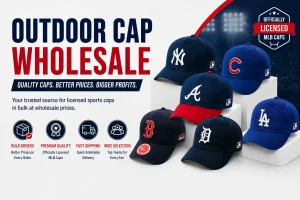 Outdoor Cap Wholesale: A Complete Guide to Buying Wholesale Outdoor Caps The demand for outdoor cap wholesale products continues to make caps an attractive category for retailers, sports stores,… Read guide →
 Where to Buy Anker Wholesale: Sourcing Guide for Electronics and Mobile Resellers Every device a customer owns is a charging problem waiting to happen, and Anker built its name on… Read guide →
 Where to Buy Owala Wholesale: Sourcing Guide for Sporting Goods and Gift Resellers The reusable water bottle went from commodity to cultural object in under a decade, and Owala rode that… Read guide →
 Where to Buy SadoTech Wholesale: Sourcing Guide for Home Improvement Resellers The wireless doorbell is the rare home product that sells itself in one sentence: no wiring, installs in… Read guide →
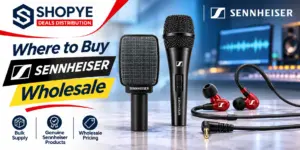 Where to Buy Sennheiser Wholesale: Sourcing Guide for Music and AV Resellers Pro audio is a category where the name on the microphone decides the sale before the customer hears… Read guide →
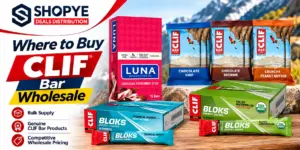 Where to Buy CLIF Bar Wholesale: Sourcing Guide for Grocery and Outdoor Resellers Energy bars are the rare grocery category that sells in the checkout lane, the gym bag, the trailhead,… Read guide →