

Quick buyer overview
This long-form guide is now organized for faster scanning. Jump to the section you need, search other Shopye articles, or continue reading the full wholesale breakdown.
- Compare MOQ, pricing, and supplier reliability before ordering.
- Use the section index to jump straight to price, supplier, or FAQ details.
- Search more wholesale guides without leaving the article page.
Selling products on Amazon in 2026 is very different from the old days when you could just list a product and wait for sales. The marketplace has become smarter, and so have the tools that decide which products get seen. If you want your items to stand out and reach the right buyers, you need a strategy that goes beyond simple keywords. This is why knowing how to sell items on Amazon now requires a smarter, data-driven approach.
In 2026, Amazon uses a multi-algorithm system to rank and recommend products. The A10 Algorithm focuses on traditional keyword matching, making sure your title and backend terms align with what buyers are searching for. COSMO, the semantic graph, looks deeper into meaning and context, helping your product appear for related search concepts that make sense to customers. Finally, Rufus AI evaluates conversational signals, reviews sentiment, and purchase intent, ensuring that products people trust are more likely to be recommended. Understanding how these three systems work together is essential if you want your listings to succeed.
Even if you are a beginner, you don’t need prior experience to start selling. Modern tools allow you to auto-find profitable products, track competitors’ complaints, and optimize your listings using AI insights. By using these automation strategies, you can quickly identify high-demand items, reduce trial-and-error, and create listings that attract buyers and boost your visibility on Amazon.
This guide will show you exactly how to approach selling in 2026, step by step, using the latest algorithms, AI tools, and optimization techniques. You will learn how to turn research and automation into a strategy that not only brings traffic but also converts visitors into loyal customers.
Step 1: Market Validation – Identify What to Sell
Before you even list a product, it is critical to understand what customers really want, where the opportunities lie and where to find the wholesale suppliers for Amazon. In 2026, the key to success is finding niche gaps and return rate gaps. A niche gap is a product area that has demand but is not fully served by existing sellers. Return rate gaps show where products are selling, but buyers are returning them because something is missing, such as poor quality, hard assembly, or misleading descriptions. If you target these gaps, your product can solve real problems, giving you a competitive advantage and higher rankings.
To make this process easier, you can use Product Opportunity Explorer. This tool allows you to analyze categories, see customer trends, and evaluate what types of products are performing well. You can check sales volume, pricing, and competition, helping you auto-find profitable items using AI. By filtering for products with unmet needs or high return rates, you can identify items that have the best chance of success while minimizing risks.
Rufus AI plays a major role in this research. It can analyze reviews, Q&A sections, and customer feedback on competitor products to extract top complaints and common pain points. By using these insights in your own listings, you show Amazon that your product solves real problems, which boosts your visibility in the algorithms and builds trust with buyers. For example, if buyers often complain about a yoga mat being too slippery, you can highlight your non-slip design in the title and bullets.
Focusing on solving customer pain points is not just about sales—it is also about ranking higher. Both COSMO and Rufus reward products that meet customer intent, meaning products that clearly address real complaints will appear more often in searches. By combining niche gap analysis, return rate insights, and AI-powered complaint extraction, you can create listings that attract buyers, reduce returns, and outperform competitors.
This step ensures that you are not just selling a product—you are providing a solution, which is exactly what modern Amazon buyers and algorithms are looking for.
Step 2: Listing Optimization – Make Your Product Discoverable

Creating a strong listing in 2026 is about more than just filling in keywords. Amazon now rewards products that are clear, relevant, and helpful to buyers. One of the most important changes is the move from old-fashioned keyword stuffing to conversational titles. Instead of cramming every keyword into the title, you should write a title that reads naturally, explains the main benefits, and helps buyers immediately understand why your product is better. For example, rather than “Yoga Mat, Pink, 6mm, Non-Slip, Workout, Gym, Women,” you could write: “Non-Slip 6mm Yoga Mat for Joint Support – Durable Pink Eco-Friendly Foam for Home Workouts.” This title includes keywords, but it also tells a story, answers questions, and is easy to read.
Next, your bullets and A+ content should focus on benefits, not just features. Buyers want to know how your product solves their problems. Highlight pain points that Rufus AI and customer reviews revealed, and explain exactly how your product addresses them. For example, instead of just saying “6mm thick mat,” explain: “6mm thick mat provides extra cushioning for joint support during long workouts.” Benefit-driven copy builds trust, reduces doubts, and increases the Intent-to-Purchase Ratio, which is a critical signal for Amazon’s algorithms.
The COSMO algorithm now evaluates semantic connections, meaning your product should naturally relate to common buyer interests. For instance, a yoga mat listing should also include phrases like “joint support,” “home gym essentials,” or “eco-friendly workout gear.” These connections help COSMO understand the context of your product and show it to buyers who might not search for the exact keyword but have the same intent.
With more buyers using mobile devices, mobile-first optimization has become essential. Keep your primary keyword and main benefit in the first 80 characters of your title so it is fully visible on smartphones. If the title is too long, mobile users may miss important information, reducing clicks and sales.
Finally, don’t ignore backend search terms and structured attributes. These fields let you include relevant NLP keywords that product listing optimization Amazon uses to index your product. Structured attributes, like size, color, material, and target audience, help your listing appear in filtered searches and improve visibility across COSMO and A10 systems. Carefully choosing and organizing these terms ensures your product is discoverable without cluttering your title or bullets.
By combining conversational titles, benefit-driven bullets, semantic connections, mobile optimization, and structured backend terms, you create listings that not only rank higher in search but also convert more visitors into customers. This approach satisfies product categories Amazon marketplace multi-algorithm system while making your listing clear, human-friendly, and persuasive.
Step 3: Logistics & Fees – Protect Your Profit
In 2026, managing logistics effectively is as important as creating a great listing. Amazon now emphasizes Lean Logistics, which means running your fulfillment process efficiently to reduce costs and improve rankings. Lean Logistics encourages sellers to keep inventory at optimal levels, minimize unnecessary packaging, and ensure fast, reliable delivery. Choosing the right fulfillment option is part of this strategy.
You have three main fulfillment choices: FBA (Fulfillment by Amazon), FBM (Fulfillment by Merchant), and SIPP (Ships in Product Packaging). FBA allows Amazon to handle storage, packing, and shipping, which is convenient but comes with standard fees. FBM gives you full control over shipping but requires you to manage storage, packaging, and delivery yourself. SIPP is a newer option that saves costs by shipping products in their own branded packaging without an Amazon outer box, reducing per-unit shipping fees and improving the customer experience. Understanding these options helps you choose the method that maximizes profit and aligns with your sales volume.
Amazon now charges Low-Inventory-Level Fees if your stock falls below a 28-day supply. These fees not only affect profitability but also act as a ranking signal for the algorithms—items that are consistently in stock are more likely to be promoted. SIPP certification can reduce shipping costs by up to $1.32 per unit and supports Lean Logistics by minimizing excess packaging. Together, managing inventory and using SIPP can significantly improve your margins.
To protect your profits, you also need to identify and fix 2026 profit leaks. Common leaks include:
- Aged inventory: Items stored for 12–15 months can cost you around $0.30 per unit. Using outlet deals or discounts to clear slow-moving stock can prevent losses.
- Inbound defects: Errors during shipment to Amazon can cost up to $1.74 per unit. Make sure labeling and prep are 100% accurate.
- Dimensional weight: Oversized boxes can push products into higher fee tiers, costing you extra per shipment. Right-sizing packaging saves money and aligns with Lean Logistics principles.
To optimize stock and reduce fees:
- Track sales velocity and reorder in time to avoid Low-Inventory-Level Fees.
- Use SIPP-certified packaging whenever possible.
- Regularly review slow-moving products and plan promotions or bundles to clear aged inventory.
- Ensure all shipments are labeled correctly to prevent inbound defects.
- Measure box sizes against dimensional weight thresholds to avoid unnecessary charges.
By combining Lean Logistics with smart fulfillment choices and careful inventory management, you not only reduce costs but also strengthen your listing performance. Efficient logistics signals to Amazon that your products are reliable, which increases visibility and ultimately boosts sales.
Step 4: Build Trust & Brand Authority
In 2026, building a strong brand on Amazon is just as important as optimizing your listing. Customers are more likely to buy from sellers they trust, and Amazon’s algorithms reward products that show credibility and authority. One of the first steps is enrolling in Brand Registry 3.0, which gives you tools to protect your intellectual property, control your listings, and prevent counterfeit products. Alongside this, Transparency Codes allow each unit of your product to be uniquely verified, giving buyers confidence in authenticity. If you need legal support for trademarks, IP Accelerator helps you quickly secure your brand rights so you can sell with full protection.
Getting your first reviews is another critical step for establishing trust. Amazon Vine is a program that allows you to receive high-quality reviews from verified buyers. For new sellers, Vine ensures that your product starts with credible feedback, which is important because Rufus AI will not recommend items with fewer than 15–20 high-quality reviews. These early reviews help improve your Review Sentiment Score, a key metric Amazon uses to evaluate buyer satisfaction and product reliability.
Other trust signals also play a major role in ranking and conversions. The Helpful Vote Rate shows how useful your reviews are to shoppers, while Q&A depth demonstrates that your listing actively engages with customer questions. User-Generated Content (UGC), like photos or videos from buyers, further reinforces credibility. By incorporating these elements, you signal to Amazon and your customers that your product is trustworthy, reliable, and high quality.
Finally, your brand story modules allow you to connect with buyers on a deeper level. Use this space to explain your mission, values, and what makes your product unique. Not only does this build emotional trust with your audience, but it also improves your Rufus AI ranking, as the algorithm evaluates listings that provide meaningful and complete information about your brand.
By combining Brand Registry 3.0, Transparency Codes, IP Accelerator, Amazon Vine, trust signals, and brand story modules, you create a listing that customers can trust and algorithms can recommend. This foundation of credibility ensures your products stand out, attract loyal buyers, and achieve higher visibility on Amazon.
Step 5: Measure & Improve Performance

Once your product is live on Amazon, your work does not stop. Selling successfully requires continuous monitoring and improvement. Amazon provides several analytics tools that help you understand how customers find your products and why they decide to buy. One of the most useful tools is Search Query Performance (SQP), which is available in Brand Analytics. SQP shows the exact search terms customers use before they click and purchase a product. By reviewing this data, you can identify which keywords bring traffic and which ones lead to real sales. This insight allows you to refine your title, bullets, and backend search terms so your listing matches real customer intent.
Another important method for improving your listing is A/B testing, also known as experimentation. Using the Manage Your Experiments tool, you can test different versions of your title, product images, or bullet points. For example, you might test two different titles to see which one attracts more clicks, or compare two main images to learn which one leads to more purchases. Amazon then tracks customer behavior and shows which version performs better. This data-driven approach removes guesswork and helps you build listings that align with the expectations of both buyers and the Amazon algorithms.
While analyzing these experiments, you should also monitor the Intent-to-Purchase Ratio. This metric reflects how many visitors actually buy your product after viewing the listing. A strong ratio indicates that your listing clearly communicates value and solves customer problems. If the ratio is low, it may mean your images, price, or product description need improvement. Regularly updating your listing based on performance data ensures that your product remains competitive in search results and continues to attract qualified buyers.
Automation also plays an important role in modern Amazon selling. Many AI-powered tools can auto-find high-performing keywords and identify new opportunities from search data. These tools analyze trends, customer reviews, and competitor listings to highlight keywords that generate conversions. They can also scan feedback and reviews to detect common complaints or missing features in similar products. By using automation, you can quickly adjust your listing content to address these insights, ensuring your product stays relevant to changing customer needs.
By consistently tracking SQP data, running A/B tests, monitoring your Intent-to-Purchase Ratio, and using tools that auto-find valuable keywords and customer insights, you create a cycle of constant improvement. This ongoing optimization helps your listing stay aligned with Amazon’s A10, COSMO, and Rufus systems, allowing your products to gain better visibility, stronger trust signals, and steady growth in sales.
Tools & Resources for Beginners
Selling successfully on Amazon in 2026 requires more than just listing a product. You need the right tools to analyze demand, understand buyers, and improve your listings over time. Amazon now provides several built-in tools that help sellers make better decisions and align with the A10 algorithm, COSMO semantic system, and Rufus AI recommendations. By learning how to use these tools, you can work smarter and reduce the risk of choosing the wrong products.
One of the most powerful tools is Rufus AI, which helps analyze customer behavior and feedback across the marketplace. Rufus AI studies reviews, questions, and purchase patterns to understand buyer intent. This allows you to identify common complaints, product gaps, and frequently asked questions. When you include these insights in your listing title, bullets, and A+ content, your product becomes more relevant to what customers are actually searching for.
Another important resource is Product Opportunity Explorer. This tool helps you research categories and discover market opportunities based on real customer demand. You can explore niche segments, view trending products, and evaluate search demand. The tool highlights customer needs that are not fully satisfied, which allows you to develop products that solve specific problems. Using this data helps you avoid saturated markets and focus on products with better chances of success.
To build trust and social proof, Amazon Vine is a valuable program for new sellers. Through Vine, selected reviewers receive your product and provide detailed feedback. These early reviews are important because Amazon’s recommendation systems, especially Rufus AI, prioritize products with credible review activity. When your listing gains high-quality reviews and positive sentiment, your visibility and conversion rates improve.
You should also use Brand Analytics, which includes tools like Search Query Performance. Brand Analytics gives you insights into the exact search terms customers use before they purchase. By studying this information, you can improve your keyword strategy, refine your conversational titles, and update backend search terms to match real buyer behavior.
Beyond Amazon’s internal tools, many AI-assisted solutions are available to help sellers auto-find profitable products and optimize listings. These tools analyze search trends, competition levels, and pricing patterns across the marketplace. They can automatically identify keywords with strong purchase intent and highlight product niches with high demand and lower competition. Some tools also monitor customer reviews and automatically extract common problems, helping you adjust your listing copy to better address customer needs.
If you are new to selling on Amazon, integrating AI tools may seem complex at first, but the process can be simple when you follow a few practical steps. Start by using Amazon’s built-in tools, such as Product Opportunity Explorer and Brand Analytics, to understand customer demand. Then use AI tools to support your research by automatically finding keyword opportunities and identifying product gaps. Focus on using these insights to improve your listing title, bullet points, and product images.
It is also important to review your data regularly. AI tools provide suggestions, but you should always confirm that the information matches your product strategy and target audience. By combining your judgment with automated insights, you can create listings that are both data-driven and customer-focused.
When you use Rufus AI insights, Product Opportunity Explorer data, Amazon Vine reviews, and Brand Analytics reports together, you gain a complete understanding of the marketplace. This combination allows you to make better product decisions, create optimized listings, and build a stronger presence on Amazon. Over time, these tools help you refine your strategy and continue improving your results as the marketplace evolves.
Conclusion
Selling items on Amazon in 2026 requires a clear understanding of how the platform works today. Amazon no longer depends on only one ranking system. Instead, your product visibility depends on a multi-algorithm strategy that includes the A10 algorithm, the COSMO semantic system, and Rufus AI recommendations.
The A10 algorithm focuses on keyword relevance and sales performance. COSMO evaluates semantic meaning and connections between related search terms. Rufus AI analyzes customer intent, review sentiment, and trust signals before recommending products. When your listing satisfies all three systems, your products have a much stronger chance of appearing in search results and gaining consistent sales.
By following the five steps explained in this guide, you will build a strong foundation for selling successfully. First, you validate the market by identifying niche gaps and return rate gaps. This step helps you understand what customers actually need and prevents you from entering oversaturated markets. Second, you optimize your listing with conversational titles, benefit-driven bullets, and structured attributes so your product becomes easier to discover.
Third, you manage logistics through Lean Logistics strategies such as FBA, FBM, and SIPP, which protect your profit margins and maintain healthy inventory levels. Fourth, you strengthen trust and brand authority by using Brand Registry tools, Amazon Vine reviews, and strong trust signals. Finally, you measure performance with Search Query Performance data and improve your listings through testing and optimization.
These steps are especially helpful for beginners who want to learn how to sell items on Amazon without wasting time or money. When you apply research, listing optimization, and inventory management together, your product becomes more competitive in the marketplace. At the same time, tools and AI systems can help you auto-find valuable insights, identify profitable keywords, and detect customer complaints that you can solve with better product features.
The most successful Amazon sellers today rely on data-driven testing and automation. Instead of guessing what works, you analyze search data, run A/B experiments, and monitor customer feedback. This process helps you continuously improve your listing and adapt to changing buyer behavior. Most importantly, always keep a customer-first approach. When your product clearly solves a real problem, and your listing communicates value simply and honestly, both customers and Amazon’s algorithms respond positively.
By combining the power of A10, COSMO, and Rufus AI with smart research, automation tools, and ongoing testing, you create a strategy that supports long-term growth. When you follow these principles, you are not just listing products on Amazon—you are building a sustainable and scalable selling business.
FAQs
How do I auto-find profitable items to sell on Amazon?
You can auto-find profitable items by using data-driven tools that analyze search demand, customer behavior, and product gaps. Tools like Product Opportunity Explorer and Brand Analytics help you study search trends and identify products that customers are already looking for. These tools also reveal niche gaps where demand exists, but competition is still manageable.
Another effective method is to analyze competitor listings and customer reviews using AI tools. Rufus AI can scan product feedback and highlight common complaints, missing features, or quality issues. When you identify these problems, you can create a product that solves them. This approach increases your chances of ranking higher because your product addresses real buyer needs.
By combining demand data, review analysis, and AI insights, you can auto-find products that have strong sales potential while reducing the risk of entering saturated markets.
What is the best way to optimize listings for COSMO and Rufus in 2026?
To optimize your listing for COSMO and Rufus in 2026, you should focus on clear language, strong benefits, and semantic relevance. COSMO analyzes how your product connects to related search topics, while Rufus AI evaluates customer intent, trust signals, and review sentiment.
Start by writing a conversational title that explains the main benefit of your product while including your primary keyword. Then create benefit-driven bullet points that show how your product solves common problems. You should also include related phrases that support semantic connections. For example, if you sell a yoga mat, include terms like joint support, home workout, or fitness essentials so COSMO can understand the context of your product.
Rufus AI also evaluates customer experience. Positive reviews, detailed product descriptions, helpful Q&A sections, and clear images all improve your credibility. When your listing provides useful information and solves customer pain points, both COSMO and Rufus are more likely to recommend it.
How do I reduce fulfillment fees while keeping my stock healthy?
Reducing fulfillment fees requires careful inventory management and efficient packaging. One of the first decisions you make is choosing the right fulfillment method, such as FBA, FBM, or SIPP. FBA allows Amazon to handle shipping and storage, while FBM lets you manage the process yourself. SIPP certification can lower shipping costs by allowing your product to ship in its own packaging without an extra Amazon box.
You should also maintain a healthy inventory level to avoid the Low-Inventory-Level Fee. Amazon expects sellers to keep enough stock to meet demand, usually around a 28-day supply. Monitoring your sales velocity and restocking early helps you avoid extra fees and ensures your product remains available to customers.
Finally, pay attention to packaging size. Oversized boxes can increase dimensional weight charges. Using the right box size and reducing excess packaging helps control shipping costs and supports Lean Logistics.
How many reviews do I need for Rufus AI to recommend my product?
In most cases, Rufus AI starts recommending products when they have at least 15 to 20 high-quality reviews. These reviews help the system measure customer satisfaction and evaluate the product’s reliability. Listings with very few reviews may struggle to gain visibility because the algorithm has limited information about customer experience.
Programs like Amazon Vine can help new sellers collect early reviews from verified users. These reviews often provide detailed feedback and help build a positive Review Sentiment Score. In addition, encouraging customers to leave honest feedback and responding to questions in the Q&A section can strengthen trust signals that Rufus AI considers when recommending products.
What tools can help beginners sell items on Amazon efficiently?
Several tools can make the selling process easier, especially for beginners who want to learn how to sell items on Amazon quickly and efficiently. Amazon provides built-in tools such as Product Opportunity Explorer, Brand Analytics, and Search Query Performance reports. These tools help you study search demand, analyze keyword performance, and understand how customers discover your products.
AI-powered research tools can also support product discovery by helping you auto-find profitable niches and analyze competitor listings. Many of these tools track keyword trends, monitor reviews, and highlight product gaps that you can turn into opportunities.
More wholesale article previews
Use these related guides to compare brands, categories, and supplier options before making your next wholesale order.
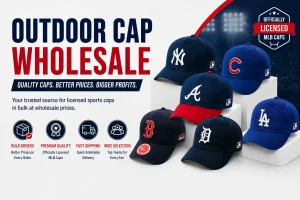 Outdoor Cap Wholesale: A Complete Guide to Buying Wholesale Outdoor Caps The demand for outdoor cap wholesale products continues to make caps an attractive category for retailers, sports stores,… Read guide →
 Where to Buy Anker Wholesale: Sourcing Guide for Electronics and Mobile Resellers Every device a customer owns is a charging problem waiting to happen, and Anker built its name on… Read guide →
 Where to Buy Owala Wholesale: Sourcing Guide for Sporting Goods and Gift Resellers The reusable water bottle went from commodity to cultural object in under a decade, and Owala rode that… Read guide →
 Where to Buy SadoTech Wholesale: Sourcing Guide for Home Improvement Resellers The wireless doorbell is the rare home product that sells itself in one sentence: no wiring, installs in… Read guide →
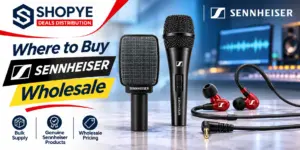 Where to Buy Sennheiser Wholesale: Sourcing Guide for Music and AV Resellers Pro audio is a category where the name on the microphone decides the sale before the customer hears… Read guide →
 Where to Buy CLIF Bar Wholesale: Sourcing Guide for Grocery and Outdoor Resellers Energy bars are the rare grocery category that sells in the checkout lane, the gym bag, the trailhead,… Read guide →