Quick buyer overview
This long-form guide is now organized for faster scanning. Jump to the section you need, search other Shopye articles, or continue reading the full wholesale breakdown.
- Compare MOQ, pricing, and supplier reliability before ordering.
- Use the section index to jump straight to price, supplier, or FAQ details.
- Search more wholesale guides without leaving the article page.
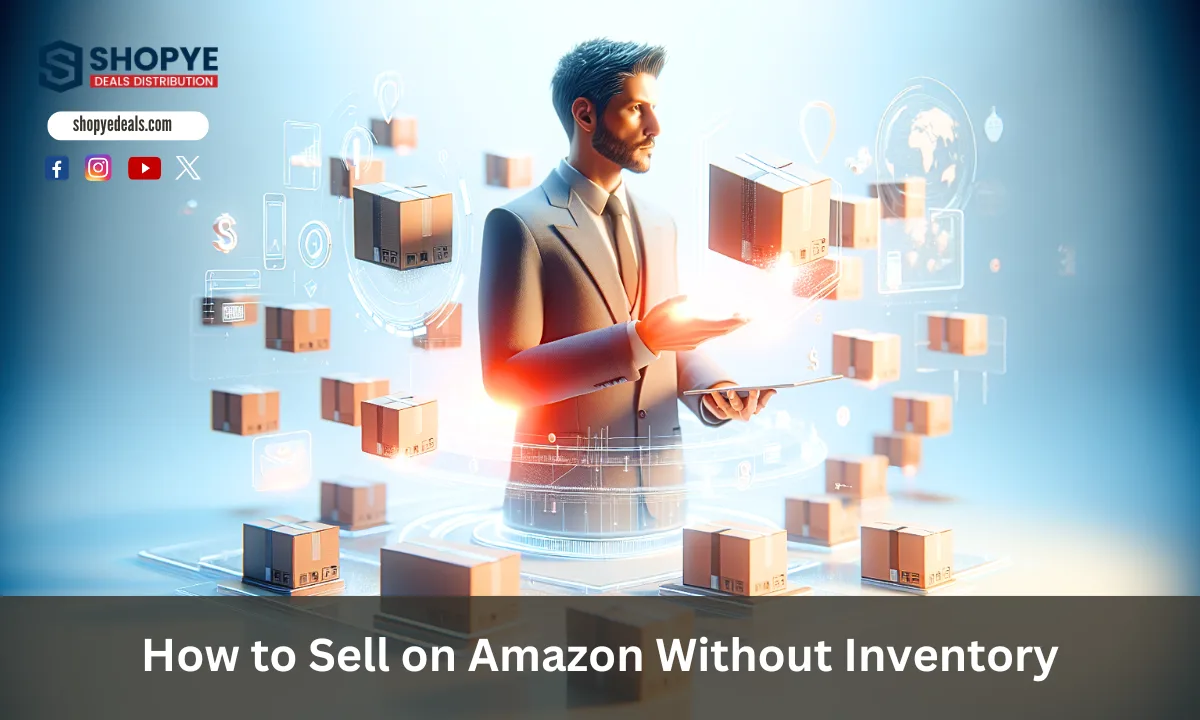
Selling on Amazon has changed a lot in 2026, and one of the most exciting opportunities for new and experienced sellers is learning how to sell on Amazon without inventory. You no longer need to store hundreds of products in a warehouse or worry about shipping delays. Instead, you can focus on managing data, creating designs, and automating operations.
This shift has introduced what experts now call Virtual Inventory models. With these models, the physical stock is handled by Amazon or trusted partners, while you control the product listings, marketing, and fulfillment workflow. Essentially, your business exists digitally, which allows you to reduce risk, save money, and scale faster than traditional inventory-based selling.
The benefits of selling without inventory are clear. You face lower upfront costs because you don’t buy products in bulk. You can automate key processes like order routing, stock syncing, and personalization, letting AI tools do much of the work. This makes your business easier to manage while giving you room to grow quickly. By understanding and applying these modern strategies, you can build a scalable, low-risk Amazon business that works efficiently in 2026 and beyond.
This introduction sets the foundation for your journey to master Amazon’s zero-inventory models, explore automated tools, and optimize every step to maximize profit while staying fully compliant with Amazon’s new rules.
Understanding the “Zero-Inventory” Concept
Understanding what selling without inventory really means is the first step to building a modern Amazon business in 2026 before you start looking for Amazon FBA wholesale suppliers. At its core, it means you don’t keep products in a warehouse or handle shipping yourself. Instead, you act as the digital manager of your store, while Amazon or trusted partners handle production, storage, and fulfillment. This allows you to focus on designing products, optimizing listings, and using AI tools to auto-find profitable items, rather than worrying about physical stock.
The key difference lies between physical inventory and data-driven virtual inventory. With physical inventory, you buy products in bulk, store them in your space or a fulfillment center, and take on all the risks of unsold items, storage costs, and shipping mistakes. Virtual inventory flips this model. Your “stock” exists digitally through your listings, real-time stock syncing, and automated order routing. You can launch multiple products without paying upfront for each one, and AI can help predict demand, optimize pricing, and generate mockups or personalized designs. This approach reduces financial risk while keeping your operations efficient and scalable.
In 2026, anyone selling without inventory must follow strict compliance rules, especially regarding the Seller of Record status. Being the Seller of Record means you are legally responsible for all orders, including taxes, invoices, and returns, even if a third-party partner handles the product. Amazon monitors this closely, so you must ensure every listing, shipment, and transaction follows policy-compliant invoicing and neutral packaging. Mastering these rules is critical because failing to meet compliance can result in account suspension, lost funds, or even permanent deactivation.
By understanding the difference between holding physical inventory and managing virtual inventory, and by following the Seller of Record requirements, you can confidently run a zero-inventory Amazon business that is both compliant and profitable in 2026.
Top 3 Inventory-Free Business Models on Amazon

1. Amazon Merch on Demand – The Artist’s Path
Amazon Merch on Demand is one of the easiest ways to start selling without holding inventory. The model is simple: you upload your designs, and Amazon takes care of everything else—printing, shipping, and customer service. This means you don’t have to invest in products or worry about storage, making it a low-risk option for beginners or creative sellers. You can focus entirely on creating designs that appeal to your audience while Amazon handles fulfillment and delivery.
In 2026, Amazon updated this program to make it more selective and professional. Approval is now invitation-only, which means you must link your application to a verified external portfolio, such as Instagram, Behance, or your personal website. Once accepted, you start at Tier 10, which allows you to list ten designs. To move up in tiers and expand your catalog, you must maintain a Freshness Score, deleting designs that haven’t sold in 18 months. This system ensures active listings remain competitive and relevant.
AI and personalization play an important role in making your designs discoverable. By using AI-generated mockups, metadata for personalization, and semantic intent optimization, your listings can appear in more relevant searches. Customers can even personalize products with their own text or images, which increases engagement and boosts sales potential without requiring extra inventory.
2. Print-on-Demand (POD) – The Brand Path
Print-on-Demand, or POD, is another zero-inventory model that works well if you want more control over branding and product selection. Unlike Amazon Merch on Demand, you use third-party partners like Printful or Gelato to produce and ship your items. You sell through your Amazon account, but the production and shipping are outsourced. This allows you to scale your business without investing in stock.
The 2026 updates for POD make it even more powerful. Partners now support Personalization Metadata, enabling customers to add text, photos, or designs directly on the product page. Compliance rules require blind shipping, meaning your partner must ship products without including any logos, invoices, or branding from their company. Automated tools for order routing and real-time stock syncing ensure your listings remain accurate and customers receive their orders on time. By combining these tools with AI-driven optimizations, you can increase discoverability and maintain smooth operations with minimal manual work.
3. Brand-Authorized Dropshipping
Brand-Authorized Dropshipping is a more advanced approach to zero-inventory selling. Unlike standard dropshipping, where you might buy from a retailer and ship directly to customers, this method requires formal agreements with brands. You become an authorized seller, allowing you to source products directly from the brand’s warehouse while maintaining full compliance.
Many sellers use prep centers as a compliance firewall. Prep centers help repackage products to remove third-party branding and ensure packaging meets Amazon’s policies. Operational rules are strict: all packaging must be neutral or your own brand, tracking information must match your account’s ship-from address, and payout delays follow the DD+7 system, where funds are held for seven days after delivery confirmation. Following these rules ensures you maintain account health, reduce risk, and stay compliant while running a professional, zero-inventory business.
By mastering these three models—Amazon Merch on Demand, Print-on-Demand, and Brand-Authorized Dropshipping—you can choose the path that fits your style and resources, scale your operations efficiently, and remain fully compliant with Amazon’s 2026 rules.
The Smart Move: Digital Goods via Kindle Direct Publishing

If you want to completely avoid physical products, selling digital goods through Kindle Direct Publishing (KDP) is one of the most effective zero-inventory strategies. You can publish e-books, but in 2026, low-content books such as journals, planners, workbooks, and puzzle books have become high-performing items. These products are quick to create, require no printing or shipping, and can be easily personalized for your audience. You focus on design, layout, and content quality, while Amazon delivers the product instantly to customers worldwide.
AI tools can help you create content faster, generate mockups, and optimize listings for search. However, Amazon now has strict AI content disclosure rules. You must indicate whether your content is AI-generated or AI-assisted. Failure to disclose this information can result in suspension or permanent loss of publishing rights. By following these rules, you maintain your credibility and ensure your account stays compliant.
The benefits of selling digital goods are clear. You face zero shipping costs and have access to a global audience, meaning your products can sell 24/7 in multiple countries without additional effort. You also gain instant inventory—as soon as your book is uploaded and approved, it is available for purchase. This makes KDP an ideal way to start a scalable, low-risk business while leveraging automation and AI tools to increase visibility, optimize listings, and drive sales.
By mastering e-books and low-content publishing, you can create a continuous revenue stream, experiment with different designs, and reach customers around the world—all without worrying about physical inventory or shipping logistics.
Automation and AI Tools to Auto-Find Profitable Products
To succeed in selling on Amazon without inventory, you need the right tools to manage your virtual stock and optimize your listings. Inventory syncing tools ensure that your product availability is always accurate across multiple channels. When a customer places an order, these systems update your stock levels in real time, preventing overselling and keeping your account healthy. Automated order routing tools make sure each order is sent to the correct fulfillment partner, whether it’s a POD service or a brand-authorized dropshipper. Meanwhile, API integration with platforms like Printful or Printify allows your store to communicate directly with your partners, automating everything from order submission to shipment tracking.
Finding high-demand products is another critical step. Using AI for semantic intent matching, you can discover items that customers are actively searching for. These tools analyze keywords, search patterns, and consumer behavior to identify trends and product opportunities. Instead of guessing what might sell, you can auto-find profitable products that are more likely to generate consistent sales.
AI also helps enhance your listings with rich, visual content that drives conversions. You can generate mockups of your products to show how designs will look in real life, create personalized product videos that showcase customization options, and develop spec sheets that clearly present features and benefits. These tools make your listings more engaging, improve discoverability in Amazon search, and increase customer confidence.
By combining inventory automation, AI-driven product discovery, and high-quality content creation, you can streamline your operations, reduce errors, and focus on growing your Amazon business efficiently. With these tools, selling without inventory becomes a smart, scalable, and data-driven strategy for 2026.
Compliance and Risk Management
How to sell on Amazon without holding inventory, understanding compliance is critical. One of the most important requirements is being the Seller of Record. This means you are legally responsible for every order, even if a third-party partner handles production and shipping. You are accountable for taxes, invoices, returns, and customer service. Amazon monitors this closely to ensure all sellers maintain proper control over their operations.
Another key rule is blind shipping. This requires that your fulfillment partner ship products without including any third-party logos, invoices, or branding. The goal is to make sure your customers see only your brand and that your account remains compliant with Amazon’s policies. Similarly, if you are selling items without standard barcodes, you may need a GTIN exemption, which allows you to list products without a traditional UPC or EAN while remaining fully compliant.
Amazon also enforces strict operational rules to protect account health. Your tracking information must match the correct ship-from address. Any mismatch can trigger a fulfillment policy violation. Packaging must be neutral or branded, and using third-party boxes or logos can result in immediate account suspension. Following these guidelines helps you maintain credibility and keep your account in good standing.
Performance metrics are essential to measure and maintain. Amazon expects your Order Defect Rate (ODR) to stay below 1%, which ensures customers receive high-quality service. Your Valid Tracking Rate (VTR) must remain high, and your late shipment rate should stay under 4% to avoid penalties. Finally, monitoring refund sentiment—how customers respond to returns and complaints—helps you anticipate problems and improve satisfaction.
By understanding Seller of Record responsibilities, blind shipping, GTIN exemptions, and adhering to tracking, packaging, and performance standards, you can protect your account while running a professional, zero-inventory Amazon business in 2026. This approach ensures your operations are both compliant and scalable, minimizing risk while maximizing growth potential.
Step-by-Step Guide: How to Start Selling Without Inventory
Starting an Amazon business without inventory may seem complicated at first, but by following clear steps, you can launch your store confidently and minimize risk. Here’s a practical roadmap to help beginners get started in 2026.
First, choose a zero-inventory model that fits your skills and goals. You can pick from Amazon Merch on Demand if you are creative and want to sell custom designs, Print-on-Demand (POD) if you prefer working with professional partners, or Brand-Authorized Dropshipping if you want to sell products directly from established brands. Each model has its own requirements, so select the one that aligns with your resources and long-term strategy.
Next, validate your suppliers or POD partners. This step ensures you only work with reliable partners who follow Amazon’s 2026 compliance rules. Check that they can handle blind shipping, provide accurate tracking, and maintain quality control. For dropshipping or POD, you can also confirm that they integrate with automation tools for inventory syncing and order routing. Validating partners reduces the risk of delays, returns, or account violations.
Once you have chosen your model and partners, set up your Amazon account with compliance in mind. Ensure your Seller of Record status is properly registered, your invoices meet Amazon policy requirements, and your listings follow GTIN and product documentation rules. Pay attention to packaging and shipping guidelines, as neutral or branded packaging is now strictly enforced to avoid penalties.
Using AI tools is the next step to streamline operations and improve discoverability. You can auto-find high-demand products, optimize your listings for search, and generate AI-driven mockups, personalized product videos, and spec sheets. AI can also help you track trends, manage inventory digitally, and personalize your product pages, making your store more attractive to customers while reducing manual work.
Finally, monitor performance and adjust your strategy regularly. Keep an eye on key metrics such as Order Defect Rate (ODR), Valid Tracking Rate (VTR), late shipment rate, and refund sentiment. If a product or listing is underperforming, use data-driven insights to improve designs, tweak descriptions, or replace low-performing items. Regular monitoring ensures your zero-inventory business remains scalable, profitable, and compliant with Amazon’s 2026 rules.
By following these practical steps, you can confidently start selling without inventory, leverage automation and AI tools, and build a sustainable Amazon business that grows efficiently and minimizes risk.
FAQs
Can I really sell on Amazon without inventory?
Yes, you can start an Amazon business without holding physical inventory by using zero-inventory models such as Amazon Merch on Demand, Print-on-Demand (POD), or Brand-Authorized Dropshipping. In these models, your products are either produced and shipped by Amazon or by verified third-party partners. Your focus is on managing listings, marketing, and compliance. By using data-driven virtual inventory, you can scale your business without upfront investment in stock or worrying about storage and shipping logistics.
How do I auto-find profitable products?
Finding the right products is easier today thanks to AI tools. You can auto-find high-demand items using semantic intent matching, which analyzes search patterns, trends, and customer behavior on Amazon. AI tools also suggest products based on sales performance, keyword relevance, and competition levels. Combining these insights with automated inventory syncing, order routing, and AI-generated mockups helps you identify profitable products quickly, without trial and error.
Do I need a business license to start?
While it is not always mandatory to have a business license to start selling on Amazon, having one is highly recommended, especially if you plan to scale. A business license helps with tax compliance, opens access to certain wholesale or brand-authorized partnerships, and strengthens your credibility as a Seller of Record. In 2026, Amazon closely monitors compliance, so operating legally protects your account from future issues.
What happens if I break Amazon compliance rules?
Breaking Amazon compliance rules can have serious consequences. This includes suspension or permanent deactivation of your account, withholding of funds, and loss of selling privileges. Key compliance areas include Seller of Record responsibilities, blind shipping, GTIN exemptions, accurate tracking, neutral packaging, and performance metrics such as Order Defect Rate (ODR), Valid Tracking Rate (VTR), and late shipment rates. Staying compliant ensures your account remains in good standing and your business continues to grow without interruptions.
Can I use AI tools to design and list products?
Absolutely. AI tools can help you design products, generate mockups, create personalized product videos, and optimize your listings for search and discoverability. They can also assist in product research to identify profitable items and manage your virtual inventory more efficiently. However, if your content is AI-generated, you must disclose whether it is AI-assisted or fully AI-created, as Amazon’s policies require transparency in 2026. Using AI correctly gives you a competitive advantage while keeping your operations fully compliant and optimized.
Conclusion
Selling on Amazon without inventory in 2026 offers significant advantages for anyone looking to start or scale an online business. By using zero-inventory models like Amazon Merch on Demand, Print-on-Demand, or Brand-Authorized Dropshipping, you reduce upfront costs, minimize financial risk, and avoid the complexities of storage and shipping. You can focus on creating high-quality products, optimizing listings, and reaching a global audience—all while your partners or Amazon handle fulfillment. Digital goods like e-books and low-content books add another layer of opportunity, giving you instant inventory with zero shipping.
Success in this space depends heavily on compliance, automation, and smart digital strategies. You must follow Amazon’s Seller of Record requirements, blind shipping rules, and GTIN exemption guidelines. Leveraging automation tools such as inventory syncing, automated order routing, and AI-driven product discovery allows you to auto-find profitable items, optimize listings, and maintain account health. Personalized product videos, AI-generated mockups, and semantic intent matching can give your listings a competitive edge while keeping operations smooth and efficient.
Now is the time to act. Choose the zero-inventory path that suits your skills and goals, validate your partners, and set up your Amazon account with compliance in mind. Use AI tools and automation to manage virtual inventory, research high-demand products, and enhance your listings. By combining these strategies, you can build a scalable, low-risk, and profitable Amazon business in 2026. The opportunity to sell without holding inventory is real, and with the right approach, you can start today and grow your digital empire efficiently and confidently.
More wholesale article previews
Use these related guides to compare brands, categories, and supplier options before making your next wholesale order.
 Outdoor Cap Wholesale: A Complete Guide to Buying Wholesale Outdoor Caps The demand for outdoor cap wholesale products continues to make caps an attractive category for retailers, sports stores,… Read guide →
 Where to Buy Anker Wholesale: Sourcing Guide for Electronics and Mobile Resellers Every device a customer owns is a charging problem waiting to happen, and Anker built its name on… Read guide →
 Where to Buy Owala Wholesale: Sourcing Guide for Sporting Goods and Gift Resellers The reusable water bottle went from commodity to cultural object in under a decade, and Owala rode that… Read guide →
 Where to Buy SadoTech Wholesale: Sourcing Guide for Home Improvement Resellers The wireless doorbell is the rare home product that sells itself in one sentence: no wiring, installs in… Read guide →
 Where to Buy Sennheiser Wholesale: Sourcing Guide for Music and AV Resellers Pro audio is a category where the name on the microphone decides the sale before the customer hears… Read guide →
 Where to Buy CLIF Bar Wholesale: Sourcing Guide for Grocery and Outdoor Resellers Energy bars are the rare grocery category that sells in the checkout lane, the gym bag, the trailhead,… Read guide →