This long-form guide is now organized for faster scanning. Jump to the section you need, search other Shopye articles, or continue reading the full wholesale breakdown.
Compare MOQ, pricing, and supplier reliability before ordering.
Use the section index to jump straight to price, supplier, or FAQ details.
Search more wholesale guides without leaving the article page.
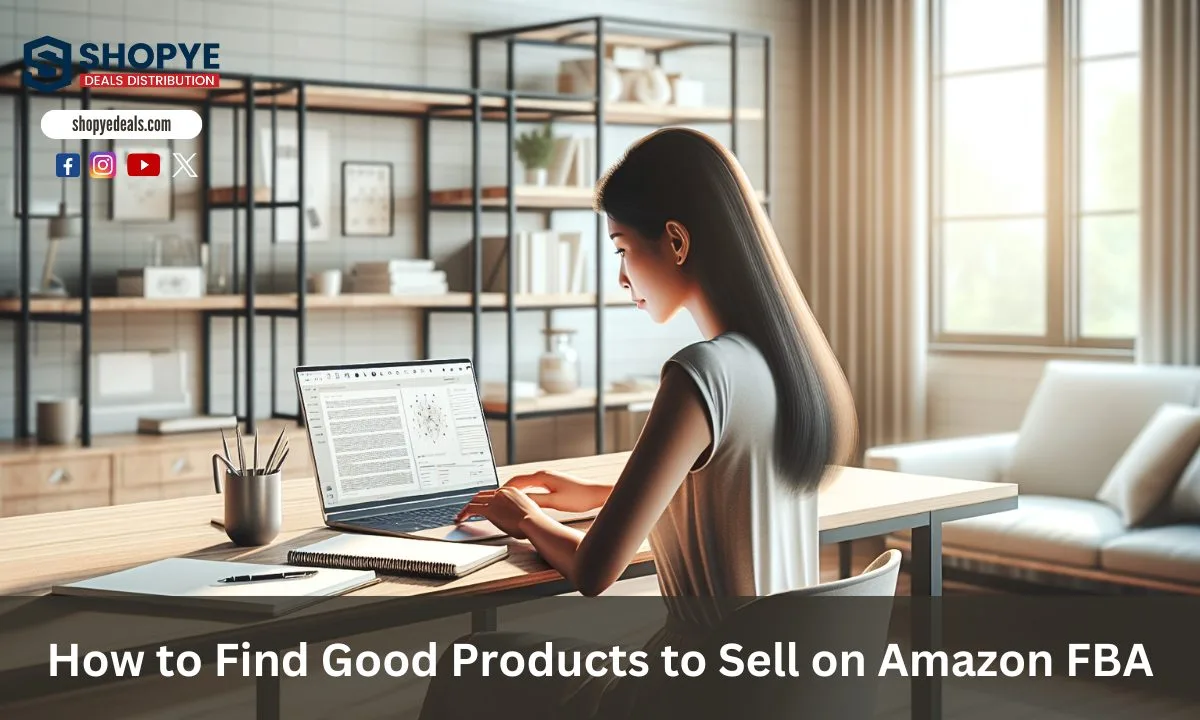
If you are trying to build an online business in the USA, choosing the right product is the first step. It decides your success or failure. Most beginners struggle to find good products on Amazon. They end up picking items with low demand or high competition.
The problem is simple but serious. Many sellers enter Amazon FBA with excitement. But they skip proper research and lose money on inventory that does not sell.
This is where the real opportunity comes in. When you understand How to Find Good Products to Sell on Amazon FBA product demand works, you make better choices. You should use data to find the right niche. Do not rely on guesswork. This helps you avoid costly mistakes. It also makes your Amazon business more stable. The difference between failure and profit often depends on one skill. That skill is smart product research.
What Is a “Good Product” in Amazon FBA?
A good product on Amazon FBA is not random. It is a product that meets a clear balance between demand, competition, and profit. In simple terms, a winning product follows what is called the Golden Ratio.
The Golden Ratio means three things working together. First, high demand means people are already searching for and buying the product. Second, low competition means fewer strong sellers are dominating the market. Third, a good profit margin means you still earn money after all Amazon fees and costs.
In 2026, this concept is more important than ever. Amazon is more competitive, and fees are higher, so weak products fail faster. That is why winning a product on Amazon FBA selection depends on strong data. It does not depend on guesswork. A profitable Amazon product strategy always follows clear Amazon product criteria before going to the next step of finding wholesalers for amazon FBA.
Amazon FBA Product Research Criteria (Winning Filters)
How to Find profitable Products to Sell on Amazon FBA, you need clear filters. These filters remove bad ideas and help you focus only on strong opportunities.
A good product should follow these conditions:
The price range is between $15 to $50, so you can earn a profit after fees
Lightweight and small size, under 2 lbs to reduce shipping cost
Low competition with under 500 reviews on top listings
Stable demand with more than 300 monthly sales
Not seasonal, meaning demand stays steady all year
These Amazon FBA product research criteria help you make better decisions. This is the correct way to choose a product for Amazon instead of relying on guesswork.
How to Find Good Products to Sell on Amazon FBA (2026 Guide)
Step 1 – Explore Demand Using Amazon Opportunity Tools
The first step is to understand demand. You can use Amazon Opportunity Explorer to see what customers search for and buy. This tool shows demand clusters. These are groups of related customer needs. This helps you avoid products with no real demand.
Step 2 – Validate Product Using Research Tools
After finding ideas, you must validate them. You can use Helium 10 and Jungle Scout. It helps to check sales data, competition level, and keyword strength.
Then you use Keepa to study price history and BSR trends. This shows if the product is stable or if it is only trending for a short time.
This step is called Amazon product validation, and it helps you avoid risky choices.
Step 3 – Analyze Competition and Review Moat
Next, you study your competitors. You check how many reviews top sellers have. If reviews are too high, it is harder to compete.
You also identify weak competitors who have poor listings or low-quality products. Reading negative reviews helps you find product gaps. These gaps show what customers want but are not getting.
This process is part of Amazon competitor analysis and Amazon review analysis.
Step 4 – Check Profit Margins and Costs
Before choosing a product, you must calculate all costs. This includes Amazon fees, shipping, and storage.
You should aim for at least a 30 percent profit margin. If the profit is lower, the product may not be worth selling.
Many beginners ignore the Amazon FBA profit calculator tools. But this step is very important for success. You also need to understand Amazon fees in 2026. These changes affect your final profit.
Step 5 – Find Product Trends Early (AI Advantage)
You can also find early trends using platforms like TikTok, Pinterest, and Reddit. These platforms show what people are starting to like before it becomes mainstream.
This helps you discover trending products in 2026. It also helps viral products to sell online before the competition increases.
Best Product Categories for Beginners in the USA Market
Some product categories are better for beginners. They are easier to manage. They also have a steady demand.
Home and kitchen products
Pet supplies
Fitness and lifestyle items
Office and study products
These categories are among the best Amazon niches in 2026. They have repeat demand. They also have a lower risk.
They are a good choice for Amazon FBA niche ideas when you are starting.
How to Find a Profitable Niche (Gap Analysis Strategy)
A niche is a small, focused market. To succeed, you must find fba products on amazon a niche where demand exists, but competition is not too strong.
You do this by studying customer pain points in reviews. If customers complain about missing features, you can use that as an opportunity.
This method is called gap analysis. It helps you find market gaps. You can become a better niche finder. You can target low competition niches. These niches still have good demand.
Common Mistakes to Avoid in Amazon Product Research
Many beginners fail because they make simple mistakes:
Choosing high-competition products
Ignoring profit margins
Selecting oversized or fragile items
Following viral trends without checking data
These are common Amazon FBA mistakes. They often lead to product research errors. These mistakes can cost you money.
Gated Categories and Product Restrictions You Must Know
Some products are restricted on Amazon. These are called gated categories.
Examples include topical products, hazardous materials, and certain toy categories.
As a beginner, you should avoid these because approval is difficult and the risk is higher. Understanding Amazon’s restricted categories and Amazon’s gated products helps you stay safe.
Tools Checklist for Amazon FBA Product Research
You should use both internal and external tools:
Amazon Opportunity Explorer for demand research
Helium 10 and Jungle Scout for validation
Keepa for price and BSR tracking
These are part of your Amazon seller tools list. They are also among the best tools for Amazon FBA research.
Quick Checklist to Identify a Winning Product
Before final selection, check:
Price between $15 to $50
Weight under 2 lbs
Under 500 reviews on top listings
At least 300 monthly sales
Stable demand all year
Minimum 30 percent profit margin
This is your winning product checklist. It is also your Amazon product checklist. It helps you make safe decisions.
Conclusion
Finding the right product is the most important part of Amazon FBA success. If you focus on data instead of emotion, you reduce risk and increase profit chances. A strong system of research, validation, and differentiation gives you a clear path. It helps you move forward with confidence. In Amazon FBA, success comes from good research. It does not come from luck.
FAQs
How do beginners find products to sell on Amazon FBA?
Beginners use research tools. They study market demand. They also apply filters. These filters include price, competition, and profit margin.
What is the best niche for Amazon FBA in 2026?
Home, kitchen, pet supplies, and fitness are strong beginner-friendly niches.
How much money do you need to start Amazon FBA?
It depends on the product type. Most beginners start with a small to medium budget. They use this for their first inventory.
Keep researching
More wholesale article previews
Use these related guides to compare brands, categories, and supplier options before making your next wholesale order.



 Outdoor Cap Wholesale: A Complete Guide to Buying Wholesale Outdoor Caps The demand for outdoor cap wholesale products continues to make caps an attractive category for retailers, sports stores,… Read guide →
 Where to Buy Anker Wholesale: Sourcing Guide for Electronics and Mobile Resellers Every device a customer owns is a charging problem waiting to happen, and Anker built its name on… Read guide →
 Where to Buy Owala Wholesale: Sourcing Guide for Sporting Goods and Gift Resellers The reusable water bottle went from commodity to cultural object in under a decade, and Owala rode that… Read guide →
 Where to Buy SadoTech Wholesale: Sourcing Guide for Home Improvement Resellers The wireless doorbell is the rare home product that sells itself in one sentence: no wiring, installs in… Read guide →
 Where to Buy Sennheiser Wholesale: Sourcing Guide for Music and AV Resellers Pro audio is a category where the name on the microphone decides the sale before the customer hears… Read guide →
 Where to Buy CLIF Bar Wholesale: Sourcing Guide for Grocery and Outdoor Resellers Energy bars are the rare grocery category that sells in the checkout lane, the gym bag, the trailhead,… Read guide →